<?xml version="1.0" encoding="UTF-8"?>
<feed xmlns="http://www.w3.org/2005/Atom">
  <title>Category: Car Maintenance | Our Scrappage, Recycling and Car Blog | ASM Auto Recycling</title>
  <link href="https://www.asm-autos.co.uk/"/>
  <updated>2026-01-26T12:13:00+00:00</updated>
  <author>
    <name>ASM Auto Recycling</name>
  </author>
  <id>tag:www.asm-autos.co.uk,2011-01-03:blog</id>
  <link rel="alternate" type="text/html" hreflang="en" href="https://www.asm-autos.co.uk/blog/category/car-maintenance/"/>
  <link rel="self" type="application/atom+xml" href="https://www.asm-autos.co.uk/blog/feed/car-maintenance/"/>
  <rights>Copyright ©, ASM Auto Recycling</rights>
  <entry>
    <title>How to change your engine oil</title>
    <link rel="alternate" type="text/html" href="https://www.asm-autos.co.uk/blog/how-to-change-your-engine-oil/"/>
    <id>tag:www.asm-autos.co.uk,2011-01-03:blog.1311</id>
    <updated>2026-01-26T12:13:00+00:00</updated>
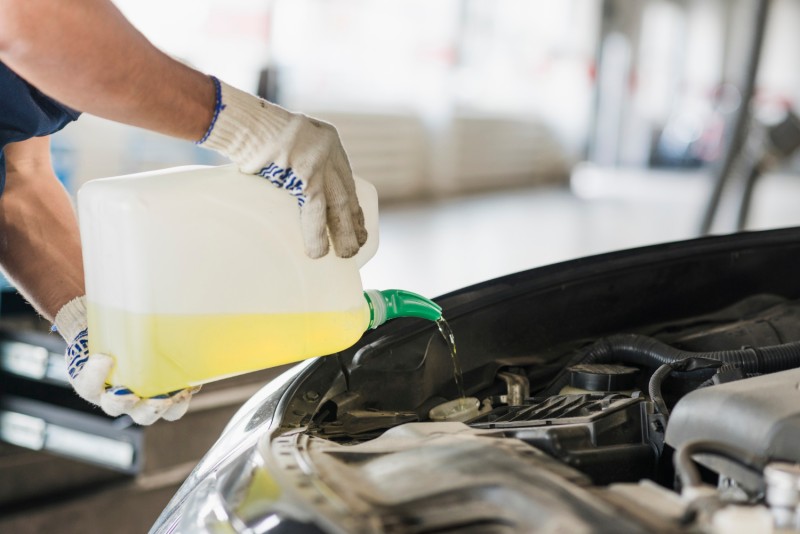
    <content type="html" xml:lang="en"><![CDATA[<p class="page-image pull-right"><span><img src="https://www.asm-autos.co.uk/image/4/800/800/images/how-to-change-your-engine-oil.jpg" style="width: 400px;" width="400" height="266" alt="Car mechanic checking oil dipstick" class="img-responsive center-block" loading="lazy" title="Image by Drazen Zigic on Freepik" data-toggle="tooltip" data-placement="bottom"/></span></p><p>Learning how to change engine oil is an incredibly valuable skill to learn. As well as extending the life of your car by thousands of miles, it’s also something that can save you a sizeable chunk of money over time. It’s one of those <a href="/blog/the-9-most-common-car-engine-problems-revealed/">things around your engine</a> to keep an eye out for.</p><p>Here’s our DIY guide to changing your engine oil.</p><h2>Make sure you buy the right filter and oil</h2><p>First things first; it’s extremely important that you follow your car-maker’s recommendations in terms of oil viscosity. All engine oil is no longer created equal, and getting the wrong type can result in poor performance, <a href="/blog/the-9-most-common-car-engine-problems-revealed/">potential engine damage</a> and even the dreaded ‘check engine’ light.</p><p>The same also goes for the oil filter. At one point, filters were all the same, but now different filters suit different oil change intervals. A car with an oil change recommendation of 3,000 miles will need a different filter to one with a recommendation of 6,000.</p><p>There is a big difference between an economy filter and a good one, and it’s one of those expenses where budgeting is a false economy, especially given that the price gap isn’t huge. So, make sure you get the correct oil filter for your car.</p><h3>The tools you need to change your engine oil</h3><p>Here are the tools you’ll need for changing your own engine oil:</p><ul>
<li>box-end wrench</li>
<li>rubber mallet</li>
<li>filter wrench</li>
<li>drain pan</li>
<li>new filter</li>
</ul><p>Before you get started, open a new bottle of oil and smear clean oil on the new filter’s gasket.</p><h2>Changing your engine oil in 10 steps</h2><p class="page-image pull-right"><span><img src="https://www.asm-autos.co.uk/image/4/800/800/images/how-to-change-your-engine-oil-2.jpg" style="width: 400px;" width="400" height="266" alt="Car mechanic filling engine oil" class="img-responsive center-block" loading="lazy" title="Image by freepik" data-toggle="tooltip" data-placement="bottom"/></span></p><ol>
<li><p>Changing your oil should take around 20 minutes as long as you’ve got everything ready to go.</p></li>
<li><p>Turn your engine on to warm it up. This will help the oil contaminants to drain more thoroughly.</p></li>
<li><p>Set out plastic sheeting on the ground and drive your car onto it. Make sure you are working on a solid, level surface.</p></li>
<li><p>Jack up your car and set the jack stands in place before lowering the car back down.</p></li>
<li><p>Place a drain pan beneath the engine and remove the drain plug. Allow the oil to drain thoroughly before re-installing the drain plugs.</p></li>
<li><p>Slide the drain pan under the oil filter. Using an oil filter wrench, remove the filter and wipe off the filter mounting surface using a clean towel.</p></li>
<li><p>Remove the old oil filter. Install the new filter by hand until the gasket touches the filter mount. Turn the filter once more to seal the gasket.</p></li>
<li><p>Re-install the drain plug using a new washer and tighten the drain plug.</p></li>
<li><p>Fill the engine using the manufacturer’s recommended engine oil type and amount (this information can be found in your vehicle owner’s manual if you’re not sure) and check to make sure no oil is leaking out.</p></li>
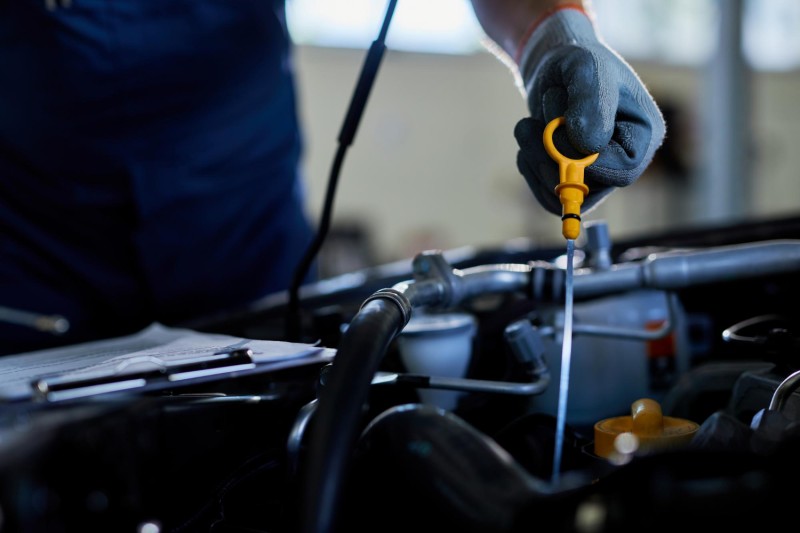
<li><p>Turn off the engine and check the oil level using the dipstick, adding more if the level isn’t yet at the ‘full’ mark. Ensure that you don’t over-fill the engine! Wipe any remaining drips down with a rag, and you’re done.</p></li>
</ol><h2>What other things should you bear in mind?</h2><p>Before changing your oil, make sure to follow these essential steps for safety and efficiency. If your engine is too cold, start it and let it run for about five minutes to warm up the oil, making it easier to drain. However, if the engine is too hot, allow it to cool down to avoid burns. When removing the drain plug, avoid using adjustable wrenches or sockets—opt for a properly sized box-end wrench instead.</p><p>Always use jack stands rather than relying solely on a jack, as working under an unsupported car is extremely dangerous. Before installing the new oil filter, coat its gasket with fresh oil to ensure a proper seal. When securing the filter, never use a filter wrench; always hand-tighten it. Lastly, organise all your oil bottles before starting the process to keep track of the amount you’re adding and prevent miscalculations.</p><h2>Engine oil change FAQs</h2><h3>How much oil does my car need?</h3><p>The amount of engine oil required for your car depends on its make, model, and engine size. You can find the specific capacity in your owner’s manual or on the manufacturer’s website. Most engines require between 4 and 6 litres of oil. Smaller engines typically need around 4 quarts, while larger engines may require up to 8 or 9 quarts. The type of oil used can influence the amount your engine needs also.</p><h3>Can I change engine oil myself?</h3><p>Yes. As long as you are confident in what you are doing, have the right tools and a suitable area in which to work, there is no reason why you can’t change engine oil yourself. Like <a href="/blog/basic-car-maintenance-how-to-change-your-car-battery-yourself/">changing a battery</a> or a <a href="/blog/how-to-change-a-tyre/">tyre</a>, if you’re not sure about what to do, go to a garage and let a professional mechanic do the job.</p><h3>Will my car run better after an oil change?</h3><p>Yes, there is no question about this. An oil change improves engine performance, lubricates the moving parts more, lowers the amount of dirt, particulates and other <a href="/blog/the-9-most-common-car-engine-problems-revealed/">impurities in the engine</a> and reduces the risk of overheating.</p><h3>What happens if you don’t change your oil?</h3><p>Not changing your engine oil at regular intervals will lead to increased wear and tear of your car’s engine, lower fuel efficiency and could eventually result in complete engine failure. Fresh oil does a better job in lubricating the engine and cooling it down. If you want to know more about doing more car maintenance yourself, we have a range of <a href="/blog/category/car-maintenance/">handy guides</a>.</p><h2>Find engine parts at ASM</h2><p>In our <a href="https://www.asm-autos.co.uk/used-car-parts/">used car parts</a> store you can search by your car registration, make and model and find all the parts that we have available for your vehicle. These include oil filters, fuel system parts, engine and transmission parts. You can also use our <a href="https://parts.asm-autos.co.uk/part-info-request/">parts enquiry form</a>. Plus, we offer a 90-day parts peace of mind guarantee for fitting used replacement engines or car parts purchased from ASM.</p>]]></content>
  </entry>
  <entry>
    <title>Car Cleaning Tips</title>
    <link rel="alternate" type="text/html" href="https://www.asm-autos.co.uk/blog/car-cleaning-tips/"/>
    <id>tag:www.asm-autos.co.uk,2011-01-03:blog.1391</id>
    <updated>2025-06-25T10:46:00+01:00</updated>
    <content type="html" xml:lang="en"><![CDATA[<p>You could easily get your car cleaned and valeted at a commercial car wash, but wouldn’t it be better to save some money and have the satisfaction of doing it yourself? It doesn’t have to take much more than an hour or two. This guide to car cleaning tips will help you get that showroom shine in no time.</p><p class="page-image pull-right"><span><img src="https://www.asm-autos.co.uk/image/4/800/800/images/2149172897.jpg" style="width: 400px;" width="400" height="266" alt="Car bonnet covered in shampoo, a hand holds a lint-free cloth ready to wipe clean" class="img-responsive center-block" loading="lazy" title="Image by freepik" data-toggle="tooltip" data-placement="bottom"/></span></p><h2>1. Make sure you have these essential things to do the job</h2><p>Here are the basic bits of kit to clean your car inside and out:</p><h3>Microfibre &amp; lint-free cloths</h3><p>A sponge can easily transfer dirt and grime back onto the car - use microfibre cloths instead. Always rinse them thoroughly between washes to remove any grit they have picked up. Lint free cloths are great on glass, as they won’t build up lots of fluff and mess.</p><h3>Brushes, washing mitt and car shampoo</h3><p>Brushes with feathered bristles are the best, as this will help to prevent scratching the paintwork. It’s important to remember that tyres require their own special brush, with models available that have extra bristles in order to access all the dust typically found in the tyre’s sidewalls.</p><h3>A vacuum cleaner</h3><p>Try and use a cordless vacuum cleaner, and the smaller the better. You don’t want to be lugging a massive Dyson between the garage and your car. Make sure it has plenty of attachments for all those hard to reach corners of the interior.</p><h3>A hose</h3><p>Give your car a shower, not a bath. Using a garden hose to spray off the initial dirt and grime is much more effective than a sponge, which will get dirty immediately unless rinsed repeatedly in clean water, and transfer dirt back onto the car.</p><h2>2. Start from the inside</h2><p><strong>Car cleaning top tip: i</strong>t makes sense to clean the interior first – so you’re not wading through pools of soapy water with a vacuum cleaner or opening car doors while they are still wet.</p><h2>3. Never underestimate the power of a vacuum</h2><p>An effective vacuum will do as much for your car as it does for your front room. The best way to clean a car interior is to get everything out of the way before you start vacuuming – the floor mats, CDs, drinks bottles, ice scrapers and food wrappers. The barer the surface the better. Clean the detachable carpets and mats before you put them back in. Don’t forget the boot too!</p><h2>4. Steam clean your upholstery</h2><p>Stains in your car will happen. Fortunately, cleaning them is a fairly simple process. Car upholstery products are widely available: it’s possible to use standard ones as well. Simply spray the cleaner evenly on the material and give it a good scrub. Once you’ve got the stain out, give the area a dry with a soft cloth.</p><p>Steam cleaning can be an effective method for cleaning car upholstery, as it removes dirt without using harsh chemicals, but be cautious, as it can damage surfaces such as leather.</p><h2>5. Wash from the top down</h2><p>It does matter in which order you wash different parts of the car body. You don’t want the grimy soap scum running down and messing up areas you’ve just washed, so start from the roof and work down.</p><h2>6. Power wash first</h2><p>With your hose give the exterior of the car and the wheels a real working over, removing the dirt that might otherwise get trapped in the sponge or mitt.</p><h2>7. The two bucket trick</h2><p>You’ll need two buckets – one with hot water with your car shampoo mixed into it; the other cold water that you’ll use to rinse your washing mitt every few minutes. <strong>Car cleaning top tip:</strong> scrub sideways, rather than a circular motion – this will reduce any swirl marks and ensure a consistent application.</p><p>Then you’ll need another rinse with the hose, and finally drying with a chamois leather.</p><p class="page-image pull-right"><span><img src="https://www.asm-autos.co.uk/image/4/800/800/images/car-cleaning-washing-5989.jpg" style="max-height: 400px;" width="266" height="400" alt="A hand holds a cloth wiping clean the alloy weels of a gleaming car" class="img-responsive center-block" loading="lazy" title="A hand holds a cloth wiping clean the alloy weels of a gleaming car"/></span></p><h2>8. Don’t forget to clean your wheels &amp; tyres</h2><p>Clean the wheel arches and wheels one set at a time. This will prevent the cleaner from drying. You can use a specialist wheel cleaner and wheel cleaning brush if you really want a professional job. Remember to dry your wheels. A good towelling down is essential, as it helps to prevent water spots and remove any remaining brake dust. Brake dust is a real nuisance, and accumulates on your wheels when the <a href="/blog/what-to-look-for-when-buying-brake-pads/">brake pads</a> press against the rotor.</p><h2>9. Check the weather</h2><p>Make sure the weather is going to be dry, but not too warm – you don’t want your car to dry too quickly while it’s being washed, and when cold water meets the hot finish of a car’s exterior, it can cause the paint to contract and crack.</p><h2>10. Leave the glass till last</h2><p>Having sparkly-clean <a href="/blog/the-ultimate-guide-to-replacing-wing-mirrors/">wing mirrors</a> and windows completes the look. You’ll get great results with good cleaning materials and some elbow grease.</p><h3>Mirrors, windows &amp; windscreen</h3><p>Use a household glass cleaner for the mirrors and windscreen: these products will spray on and wipe off easily and they’ll give you a much better shine.</p><ul>
<li>Only use lint-free soft rags or sturdy paper towels, or you could scratch the finish.</li>
<li><strong>Car cleaning top tip:</strong> wipe one way for the inside and one way for the outside. By doing this you’ll be able to tell which side any streaks are on when you’ve finished.</li>
<li>Don’t forget to clean the <a href="/blog/how-to-change-windscreen-wiper-blades/">wiper blades</a> themselves. If the blades remain dirty, they can scratch the glass or leave streaks on it, ruining all your hard work. Be gentle when moving the wipers, they can be deceptively easy to break.</li>
</ul><h2>Find your replacement car parts at ASM</h2><p>We hope you’ve found our car cleaning guide useful. When you’re next washing your car, have a look for any parts that you think need replacing. ASM Auto Recycling can help with your search for replacement parts in our <a href="https://www.asm-autos.co.uk/used-car-parts/">used car parts</a> store. Search by car registration, make and model. We offer a 90-day parts peace of mind guarantee for fitting used replacement engines or car parts purchased from ASM.</p>]]></content>
  </entry>
  <entry>
    <title>How To Replace A Car Air Filter</title>
    <link rel="alternate" type="text/html" href="https://www.asm-autos.co.uk/blog/how-to-replace-a-car-air-filter/"/>
    <id>tag:www.asm-autos.co.uk,2011-01-03:blog.1372</id>
    <updated>2025-02-18T16:00:00+00:00</updated>
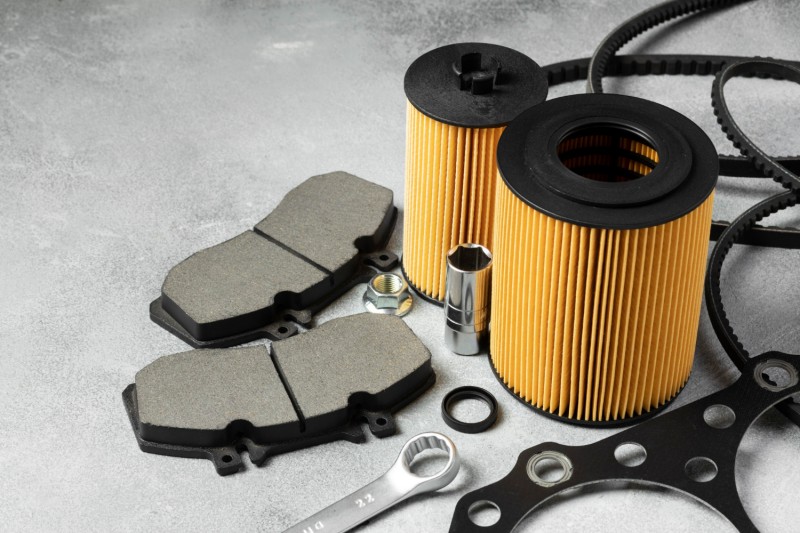
    <content type="html" xml:lang="en"><![CDATA[<p>Changing an air filter in a car is an easy and quick motor maintenance job. It does not require any professional training or skills, and all you need is a few tools and a few minutes to replace a car engine air filter. It is one of those <a href="/blog/the-9-most-common-car-engine-problems-revealed/">common car issues</a> that you can fix yourself.</p><h2>What does an air filter do in a car?</h2><p>Whether you drive a petrol or diesel vehicle, the fuel needs to combine with oxygen in order to work effectively. Air filters ensure that any kind of debris, pollen or dirt in the air does not get into the vehicle’s engine. The cleaner the air is that reaches the engine the more efficiently the car will run. Over time air filters get dirty and become less effective. If air filters aren’t changed regularly, the engine is more likely to be damaged.</p><p>Air filters are made of paper, cotton or foam, and are fitted into a housing within the engine bay. These housings are usually very accessible, making changing a car air filter quite a simple job for a car owner.</p><h2>When to change the air filter on a car</h2><p>Opinions vary on when you should replace your air filter – every 30,000 miles, 3-4 years, 15,000 miles, or every year – but the important thing is to check it regularly. If you have been doing a lot of driving, or the weather has been particularly dry, air filters get clogged more quickly. The area where you drive is also a factor. If you live in a rural area you might do more driving on dirt tracks or muddy roads, or if you live in a city, where the air is more polluted, the life of an air filter can be shorter. Your car’s maintenance manual will tell you how often the air filter should be changed.</p><p>Air filters are <a href="/blog/which-car-parts-need-to-be-replaced-the-most-often/">among those parts that have to be replaced regularly</a> in your car.</p><p class="page-image pull-right"><span><img src="https://www.asm-autos.co.uk/image/4/800/800/images/2149030411.jpg" style="width: 400px;" width="400" height="266" alt="Air filters and other assorted car accessories" class="img-responsive center-block" loading="lazy" title="Image by freepik" data-toggle="tooltip" data-placement="bottom"/></span></p><h2>How to replace a car air filter</h2><p><strong>You can pick up new air filters for between £10-20 at most automotive spares shops.</strong></p><h3>1. Gather your tools</h3><p>You should only need a flat blade or Phillips screwdriver, a clean damp cloth and maybe a hand-held vacuum cleaner.</p><h3>2. Locate the air filter housing</h3><p>Open the bonnet. Locate the air filter housing (it should be quite easy to get to). In modern cars it is usually located near the top or side of the engine. Release the retaining clips or use the screwdriver to unscrew the fixings.</p><h3>3. Remove the old air filter</h3><p>Lift off the cover of the housing and remove the old air filter (note down which way the filter is facing, as it will need to be replaced in the same way).</p><h3>4. Clean the air filter housing</h3><p>Wipe the dirt from the housing with a damp cloth, or use the vacuum cleaner if there is a considerable amount of debris. Don’t use compressed air to clean out the filter box assembly.</p><h3>5. Install the new air filter</h3><p>Place the new air filter into the filter housing and put the filter cover back on. Secure it in place using either the screws or the retaining clips.</p><h3>6. Check all connections are secure</h3><p>Ensure that the air intake and vacuum hoses don’t have any cracks in them, and that the hose connections to the filter housing cover are secure. Shut the bonnet and you’re done!</p><p>That’s the whole job of changing a car air filter.</p><h2>Benefits of changing a car air filter</h2><p>Replacing a car air filter will have a number of benefits for your vehicle.</p><h3>Increasing fuel efficiency</h3><p>The most immediate effect of changing your car’s air filter will be to increase your fuel mileage. You should see an improvement of 5-10% in fuel efficiency, because a clean air filter improves air flow to the engine.</p><h3>Lower emissions</h3><p>The amount of CO2 your vehicle emits is going to be significantly reduced with a new air filter. Clogged air filters not only reduce air flow to your engine, but also cause an imbalance in the air-fuel mixture and fouled spark plugs.</p><h3>Extending engine life</h3><p>Any dirt or debris that gets into engine parts like cylinders and pistons will negatively affect engine performance. So changing the air filter will help to prolong the life of your engine.</p><h2>Find your replacement car parts at ASM</h2><p>With a wide range of <a href="https://parts.asm-autos.co.uk/engines/">used car engine parts available</a> from ASM Auto Recycling, we can help with your search for replacement parts for your car. In our <a href="https://www.asm-autos.co.uk/used-car-parts/">used car parts</a> store you can search by your car registration, make and model and find all the parts that we have available for your vehicle. Plus, we offer a 90-day parts peace of mind guarantee for fitting used replacement engines or car parts purchased from ASM.</p>]]></content>
  </entry>
  <entry>
    <title>Our Guide to Pre-Worn Tyres</title>
    <link rel="alternate" type="text/html" href="https://www.asm-autos.co.uk/blog/used-tyres-guide/"/>
    <id>tag:www.asm-autos.co.uk,2011-01-03:blog.1360</id>
    <updated>2024-10-29T13:07:00+00:00</updated>
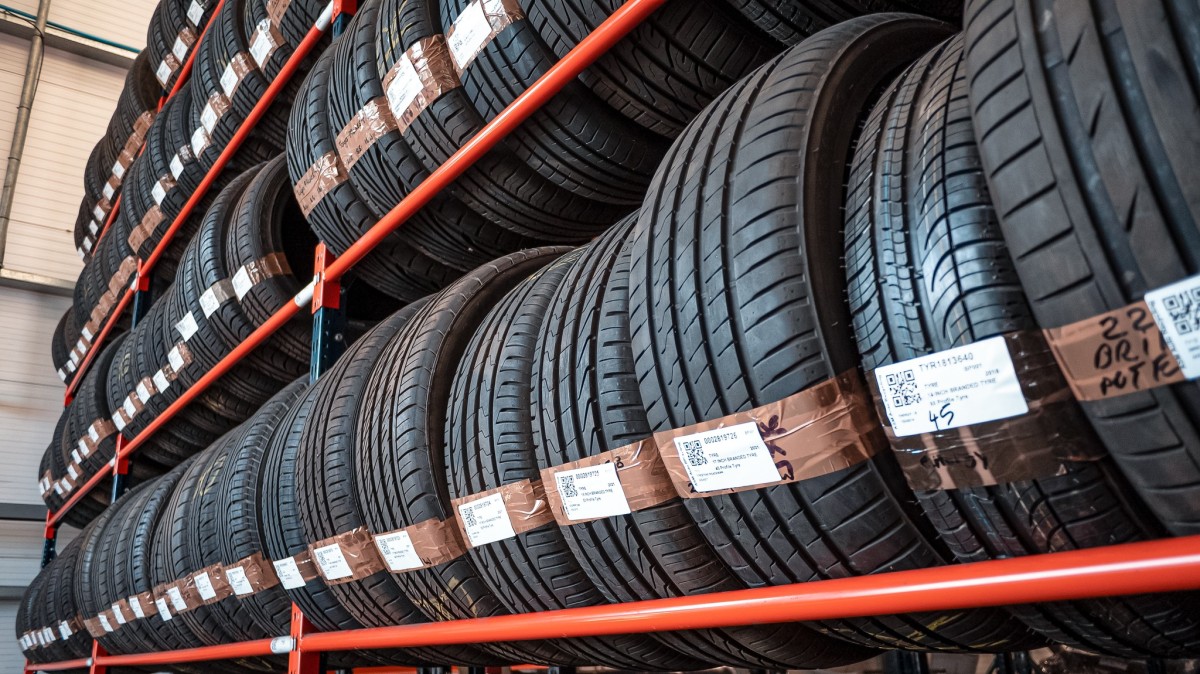
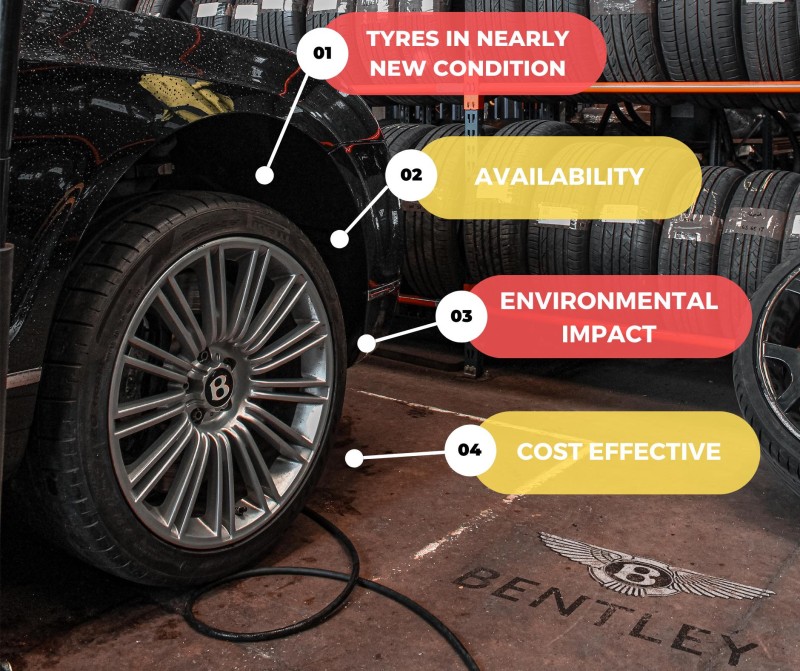
    <content type="html" xml:lang="en"><![CDATA[<p>The Tyre Industry Federation estimates that <a href="https://movingon.blog.gov.uk/2022/12/07/buying-part-worn-tyres-what-operators-need-to-know/">10% of all tyres bought in the UK are part-worn</a>. That’s about 5 million tyres that are not brand new when they are fitted to vehicles. Reputable tyre retailers will ensure the tyres they sell are above the legal standard, but not every dealer is so diligent.</p><p>What do you need to look out for when buying part-worn tyres, and what are the warning signs?</p><p><span><img src="https://www.asm-autos.co.uk/image/4/1200/1200/images/part-worn-tyres-in-racks-close-up_1.jpg" style="width: 600px;" width="600" height="336" alt="Part-worn tyres in racks close up" class="img-responsive center-block" loading="lazy" title="Part-worn tyres in racks close up"/></span></p><h2>What are part-worn tyres?</h2><p>For some years, the part-worn tyre has been a popular alternative to the (now largely extinct) remoulded tyre, which involved recladding a worn-out tyre with new rubber.  In contrast, a part-worn tyre is simply a tyre which has previously been used on another vehicle. These are often taken from a <a href="/scrap-my-car/">vehicle before it is scrapped</a>, if the tyres are deemed roadworthy and valuable enough to be salvaged.</p><h2>Are part worn tyres legal in the UK?</h2><p>Part-worn tyres or second-hand tyres are perfectly legal – <strong>if they are kept to the minimum standard</strong>. This means that the tread depth should be at least 1.6mm – although it is recommended that tread depth shouldn’t go below 2mm and most experts suggest replacing tyres at 3mm.</p><p>Nevertheless, many tyres sold in the UK have been found to not even reach this legal minimum. In fact, TyreSafe, a UK tyre safety charity, found that 94% of part-worn tyres they inspected were classed as illegal, with <a href="https://www.tyresafe.org/tyre-advice/part-worn-tyres/">63% unsafe to return to the road</a>.</p><h2>How long do part worn tyres last?</h2><p>Every second-hand tyre will have a different lifespan, depending on the condition it is in when fitted, its tread depth and the mileage of the vehicle. However, <a href="https://www.parkers.co.uk/car-advice/part-worn-tyres/">it is estimated</a> that a part-worn tyre with 3mm of tread depth will be able to run for around 14,000 miles (or about two years driving).</p><h2>Should I buy new or part-worn tyres?</h2><p>Price is the only reason someone might consider buying part-worn tyres.  Completely replacing your vehicle’s tyres with brand new ones can be two or three times as expensive.  It’s therefore entirely understandable that the average budget-conscious motorist could be attracted to the cheaper alternative.</p><h2>Are used tyres safe?</h2><p>The safety criteria of part-worn tyres is laid out in the UK by the <a href="https://www.legislation.gov.uk/uksi/1994/3117/contents/made">Motor Vehicle Tyres (Safety) Regulations 1994</a>.  It is an offence to sell tyres that do not meet these standards. However, the reality is that the law is not enforced satisfactorily, and there is no independent industry body to ensure uniform standards. This makes it all too easy for rogue traders and unscrupulous dealers to allow poor-quality products onto the market.</p><h2>Are part-worn tyres worth the risk?</h2><p>Every individual will have their own experience of part-worn tyres. For some drivers they are a great budget option because they keep their vehicle on the road at a fraction of the asking price of new tyres. For others, a part-worn tyre purchase might have led to an accident, blow-out or breakdown.</p><p>Some used tyres actually have safety benefits, such as specialist <a href="/blog/the-benefits-to-owning-used-winter-tyres/">winter tyres</a>.</p><p>If drivers know what to look for, however, there’s no reason why you can’t buy a set of part-worn tyres which will see you through a healthy amount of mileage.</p><h2>Part-worn tyre buying guide</h2><p class="page-image pull-right"><span><img src="https://www.asm-autos.co.uk/image/4/800/800/images/part-worn-tyres-benefits.jpg" style="width: 400px;" width="400" height="335" alt="Close-up of tyre on car wheel with graphic of four benefits overlaid: nearly new condition, availability, environtmental impact, cost effective." class="img-responsive center-block" loading="lazy" title="Close-up of tyre on car wheel with graphic of four benefits overlaid: nearly new condition, availability, environtmental impact, cost effective."/></span></p><h3>Buy big brands</h3><p>Large corporations and vehicle manufacturers tend to care more about regulations – and ultimately their image – than a back-street garage does. Buying from a brand you can trust is a good way to ensure the part-worn tyre you get is built to a recognised standard.</p><h3>Buy in bulk</h3><p>Driving on a used tyre which doesn’t match the other three is not the best idea. <a href="https://parts.asm-autos.co.uk/tyre-bay/">Buying used tyres</a> in a pair or a set can be advantageous, as you can ensure that both tyres on an axle are matching.</p><h3>Check tread wear</h3><p>A new tyre should have a <a href="/blog/typical-tyre-problems-that-can-hinder-the-performance-of-your-car/">tread of roughly 8mm</a>.  When the tread wears down to between 2-3mm, this is the point where most industry experts recommend seeking a replacement.  A tyre which has hardly been used should guarantee plenty of mileage – look for those which are nearing 8mm depth and evenly worn all the way round. Make sure the original grooves are clearly visible, and there are no lumps or bulges internally or externally. None of the ply or cord should be exposed.</p><h3>Check sidewall damage</h3><p>After tread wear, you should check the sidewalls for scrapes, cuts, eroded rubber or any signs of previous damage.  Damage on the sidewalls can indicate a fundamental problem with the tyre as a whole, so be sure to investigate the internal sidewall as well.</p><h3>Check for repairs</h3><p>Tyres which have been punctured in their previous life are often plugged with rubber to seal against any leaks.  There’s nothing wrong with these repairs, in principle.  However, visible repairs could indicate a deeper problem limiting the tyre’s <a href="https://www.tyresafe.org/tyre-advice/tyre-speed-ratings-explained/">maximum speed rating</a> or overall effectiveness.  If you see one of these indicators, check the interior of the tyre.  You may unearth structural damage to the tyre belts, a definite deal-killer.</p><h2>You have been (part) warned!</h2><p>Part-worn tyres remain controversial within the industry, and not without reason.  Knowing the source of your tyres, and their history, is increasingly important for anybody looking to buy second-hand. While there will always be a need to check the quality of the tyres you’re buying, this extra responsibility can be shared by going to a company you can trust, like ASM Auto Recycling.</p><h2>ASM Auto Recycling puts tyre quality first</h2><p>The <a href="https://parts.asm-autos.co.uk/tyre-bay/">tyres sold by our team at ASM</a> are in virtually mint condition, more nearly-new than part-worn. When scrapping a vehicle, we tend to source our tyres from unused spares instead of those which have been on the road.</p><p>Our staff are professionally trained and accredited to judge the quality of any tyre, which is why we check tread depths, tyre pressure and more before selling to any of our customers. We won’t ‘tyre’ of giving you great service!</p>]]></content>
  </entry>
  <entry>
    <title>Finding a car engine replacement in the UK</title>
    <link rel="alternate" type="text/html" href="https://www.asm-autos.co.uk/blog/guide-to-finding-a-replacement-car-engine/"/>
    <id>tag:www.asm-autos.co.uk,2011-01-03:blog.1353</id>
    <updated>2024-08-23T11:35:00+01:00</updated>
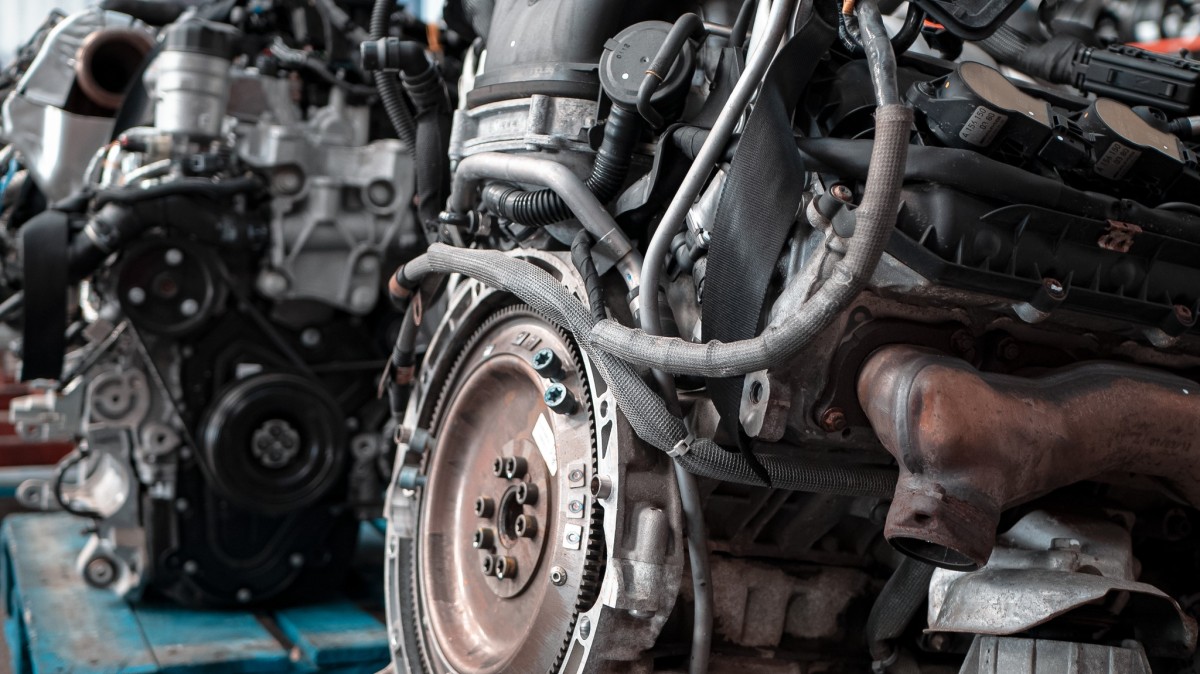
    <content type="html" xml:lang="en"><![CDATA[<p class="page-image text-center"><span><img src="https://www.asm-autos.co.uk/image/4/1200/1200/images/engines-on-pallets.jpg" style="width: 600px;" width="600" height="336" alt="Used car engines on pallets" class="img-responsive center-block" loading="lazy" title="Used car engines on pallets"/></span></p><p>A car engine is one of the most important components of a working vehicle.  Without a working engine, your vehicle is a motionless chassis. Unfortunately, there are engines that stop functioning either due to malfunction or a road accident.</p><p>So, when the time comes, how do you find a replacement engine? You might be surprised to learn that <a href="https://parts.asm-autos.co.uk/engines/">second hand engines</a> are a viable alternative to a new engine.</p><h2>What engines are compatible with my car?</h2><p>Understandably, car engines aren’t completely interchangeable.  This doesn’t mean that there isn’t some crossover: two slightly different car models released by the same company within a five-year period might actually be able to use the same engine.</p><p>The first question you need to ask is: is it a long or short block engine?</p><p>These two variations can actually be found on what is otherwise the same engine, so it’s important to know the difference.</p><ul>
<li><p>A long block engine includes the full works when it comes to parts: cylinder heads, camshafts, valves, valve springs and an intact head gasket.  As such, long block engines can normally be installed quickly and easily and will make a suitable replacement for any engine that’s been written off.</p></li>
<li><p>A short block engine, on the other hand, is designed for cases where the full engine doesn’t need replacing; just parts of it.  A short block engine is usually much cheaper as a result.</p></li>
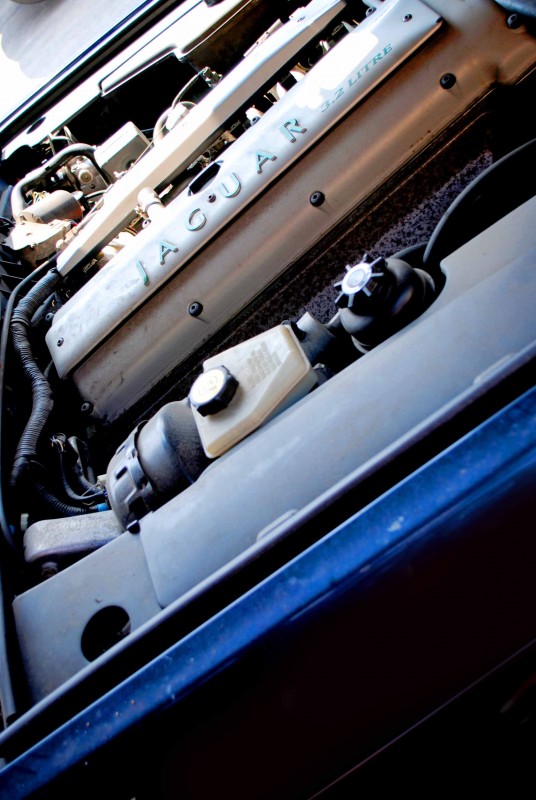
</ul><h2>Second hand replacement engines</h2><p>Second-hand car engines can sometimes be more reliable than brand new models.</p><p>It’s the greener thing to do. By repairing your vehicle and purchasing a second-hand car engine – rather than sending it for <a href="/vehicle-dismantling/">vehicle dismantling</a> – you are ensuring a considerable amount of junk materials do not enter the waste and recycling stream.</p><p>It’s also affordable. A brand-new engine can be extremely expensive; often costing more than an entire second-hand vehicle.  A refurbished car engine has already depreciated in price and ultimately costs less.</p><p class="page-image pull-right"><span><img src="https://www.asm-autos.co.uk/image/4/800/800/images/dsc_0048_1.jpg" style="max-height: 400px;" width="267" height="400" alt="Car bonnet opened showing engine" class="img-responsive center-block" loading="lazy" title="Car bonnet opened showing engine"/></span></p><h2>Parts that should be included in a second-hand car engine</h2><p>If you know what you are looking for, it is a good idea to check that the replacement engine you are buying has <a href="https://www.asm-autos.co.uk/used-car-parts/">all the parts</a> you would expect:</p><ul>
<li>Intake and exhaust valves</li>
<li>Spark plugs for the engine’s combustion</li>
<li>Pistons</li>
<li>Cylinder sleeves to house the pistons</li>
<li>Piston rings to seal the piston and cylinder</li>
<li>Crankshaft to move the pistons</li>
<li>Connecting rod to connect the crankshaft to the piston</li>
<li>Sump reservoir for oil storage</li>
</ul><h2>Tips on car engine replacement</h2><h3>‘What engines are compatible with my car?’</h3><p>Before you start searching for the right type of engine for your car, ensure you take note of your vehicle identification number. You can usually find this printed under the plastic trim on the drivers’ side window, or on the chassis. Other information about your car you need is the engine code and production date to ensure any refurbished engine is compatible with your car. At ASM Auto Recycling you can <a href="https://www.asm-autos.co.uk/used-car-parts/">enter your registration number</a> to see refurbished engines and other parts matching your vehicle.</p><h3>Opt for the engine with the lowest mileage</h3><p>Although second-hand engines can be more dependable than brand new engines, it is still a good idea to find an engine with the lowest possible mileage.  These will have minimal wear and tear and are likely to last as long as the rest of your vehicle.</p><h3>Seek a used engine with an initial warranty</h3><p>When it comes to <a href="https://www.asm-autos.co.uk/used-car-parts/">buying any type of second-hand car part,</a> you should always opt for one with an extended warranty.  The 90-day parts-only guarantee we offer on all our refurbished car parts gives our customers certainty, at least in the short term.</p><h3>What is the reconditioned engine’s history?</h3><p>Before you part with your money, ask for a full service history of the car the engine was once used in. Ask if any individual parts have been replaced and check how many miles the engine already has under its belt.</p><h2>What else should you look for with a replacement engine?</h2><h3>Check out the exterior housing</h3><p>It is important to inspect the engine’s shell to make sure there is not too much wear and tear.  If you’re going for the second-hand approach – which is cheaper – there will be some, but if there’s too much it can be a warning sign.</p><p>You should also check for any cracks and make sure that all of the nuts and bolts are securely fastened. Be as thorough as you can – along with the brakes, the engine represents the most important part of running a safe vehicle.</p><h3>Is the engine salvaged or rebuilt?</h3><ul>
<li><p><a href="https://parts.asm-autos.co.uk/engines/">Salvaged engines</a> have been taken from a car that’s either been in an accident or is too old to use. In some cases, salvaged engines can be in great condition: they might have only been on the road for a few years and are often very easy to evaluate.</p></li>
<li><p>Rebuilt engines can be tougher to get a handle on and it’s recommended to only buy one from a credible source.</p></li>
</ul><h2>Find an engine for your car and other parts at ASM</h2><p>With a <a href="https://parts.asm-autos.co.uk/engines/">wide range of reconditioned engines</a> for sale from ASM Auto Recycling, we can help with your search for a replacement engine for your car. In our <a href="https://www.asm-autos.co.uk/used-car-parts/">used car parts</a> store you can search by your car registration, make and model and find all the parts that we have available for your vehicle. Plus, we offer a 90-day parts peace of mind guarantee for fitting used replacement engines or car parts purchased from ASM.</p>]]></content>
  </entry>
  <entry>
    <title>The Ultimate Guide to Replacing Wing Mirrors </title>
    <link rel="alternate" type="text/html" href="https://www.asm-autos.co.uk/blog/the-ultimate-guide-to-replacing-wing-mirrors/"/>
    <id>tag:www.asm-autos.co.uk,2011-01-03:blog.1347</id>
    <updated>2024-06-27T17:25:00+01:00</updated>
    <content type="html" xml:lang="en"><![CDATA[<p class="page-image pull-right"><span><img src="https://www.asm-autos.co.uk/image/4/800/800/images/wing-mirror-viewing-motorway-traffic.jpg" style="width: 400px;" width="400" height="225" alt="Wing mirror viewing motorway traffic" class="img-responsive center-block" loading="lazy" title="Wing mirror viewing motorway traffic"/></span></p><p>Wing mirrors are an important part of a vehicle. They enable you to drive safely and enjoy full awareness of all other vehicles, objects, cyclists and pedestrians around you. If you are driving with a broken wing mirror, even easy driving manoeuvres that we often take for granted can become exceptionally dangerous. Driving without two fully functional wing mirrors places both you and other road users at great risk.</p><p>But what should you do if you have a broken or damaged wing mirror? Should you try to fix it yourself, or get a replacement? Find out with our comprehensive guide to replacing a wing mirror.</p><h2>Replacing a wing mirror</h2><p>It’s now incredibly easy to source a replacement for a broken or damaged mirror. There’s no reason whatsoever for driving with poor peripheral vision at the wheel.  It’s also worth noting that if you enter your vehicle for its MOT with a broken or faulty wing mirror it will receive an instant fail. Replacement mirror parts are widely available both new and second hand.</p><p>At ASM Auto Recycling we offer three different types of wing mirror replacements that you can purchase:</p><ul>
<li>Full wing mirror units</li>
<li>Replacement mirror glass</li>
<li>Replacement mirror covers</li>
</ul><p>These are available from our <a href="https://www.asm-autos.co.uk/used-car-parts/">used car parts</a> service, which now has over 100,000 searchable spare parts from manufacturers ranging from Alfa Romeo to Volvo.</p><h2>Full wing mirror units</h2><p>In the event that you need a complete replacement, it is important to know what type of mirror you have. In order to get the right unit, you’ll need to be aware of which features your replacement wing mirror unit needs.</p><h3>Manual, electric or cable?</h3><p>Was your original mirror a manual one that required you to move the mirror glass by hand to the ideal position? Or was it an electric mirror, which could be adjusted using a button or joystick inside the vehicle? Or was your original mirror a cable mirror that required you to adjust the mirror glass using a manual lever?</p><h3>Heated mirrors</h3><p>Some mirrors have heating elements in them to keep mirrors free from ice, fogging and dimming in the colder months.  If you’re unsure of whether your mirror was heated, look for a heating symbol on or close to the electric mirror adjustor.  Alternatively, remove the old glass mirror from the unit to discover if there are electric cables attached to the rear of the glass.</p><h3>Folding mirrors, puddle lamps or inbuilt indicators</h3><p>Folding mirrors automatically move inwards when a vehicle is parked and locked. Some cars will have mirrors fitted with small lights, known as puddle lamps, which light the floor around the front doors when it is unlocked. Was your mirror fitted with an inbuilt indicator?</p><h2>Replacement mirror covers</h2><p>It is very easy to damage mirror covers. They can easily snap off on the road if you get too close to another vehicle, or if your parked car is the target of mindless vandalism.</p><p>If the housing is cracked or snapped open, exposing the internals of the mirror, you can find mirror covers that are the same colour as the rest of the body of your vehicle.  If the replacement is a neutral colour, you can always get it sprayed to match the rest of the vehicle.</p><h2>Replacement mirror glass</h2><p>In the event that your mirror glass is cracked but the rest of the unit’s housing is in good condition, it’s possible to carry out a simple replacement of the mirror glass.</p><p>You can search for mirror units, mirror covers and replacement glass through our <a href="https://www.asm-autos.co.uk/used-car-parts/">used car parts</a> service.</p><h2>Should you replace a wing mirror unit yourself?</h2><p>We would advise against replacing wing mirrors yourself, unless it is just the glass that needs replacing. It can be very fiddly and turn into a bigger job than you expected. To replace the complete mirror unit will involve removing the door panel, taking screws off and working around electrical cables.</p><h2>How to replace wing mirror glass</h2><p>Ensure you are aware of whether you need a replacement offside (driver side) or nearside (passenger side) mirror glass. Also check whether your wing mirror glass is convex (curved out to provide a wider perspective) or flat.</p><p>Firstly, you will need to lever the broken glass, so it unclips itself from the mirror housing. Check for any broken tabs or clips. Taking your new mirror glass, attach any wires that are needed for heating or indication, and align the glass with the clips that will hold it in place. Pressing firmly down, the glass should click into place.</p><p>Readjust the mirror position so it is in optimum position for your sightlines when driving.</p><h2>Should you replace a broken wing mirror with a second-hand part?</h2><p>It is perfectly acceptable and safe to replace your broken wing mirror with a used mirror from another vehicle. At ASM Auto Recycling all our spare parts are cleaned, tested where possible and covered by our 90-day parts-only guarantee.</p><p>With our used car parts service, you can find all the parts our yard stocks for your make and model of vehicle. Buy them online and get them delivered or call our parts department and collect in person from our Thame depot.</p><h2>Replacing a wing mirror at ASM</h2><p>Replacing a wing mirror is easy at ASM Auto Recycling. You can find mirror units, replacement mirror glass and mirror covers via our <a href="https://www.asm-autos.co.uk/used-car-parts/">used car parts search engine</a>, saving you up to 70% on main dealer prices.</p>]]></content>
  </entry>
  <entry>
    <title>How To Find Replacement Parts for My Car</title>
    <link rel="alternate" type="text/html" href="https://www.asm-autos.co.uk/blog/how-to-find-replacement-parts-for-my-car/"/>
    <id>tag:www.asm-autos.co.uk,2011-01-03:blog.1334</id>
    <updated>2024-05-30T16:34:00+01:00</updated>
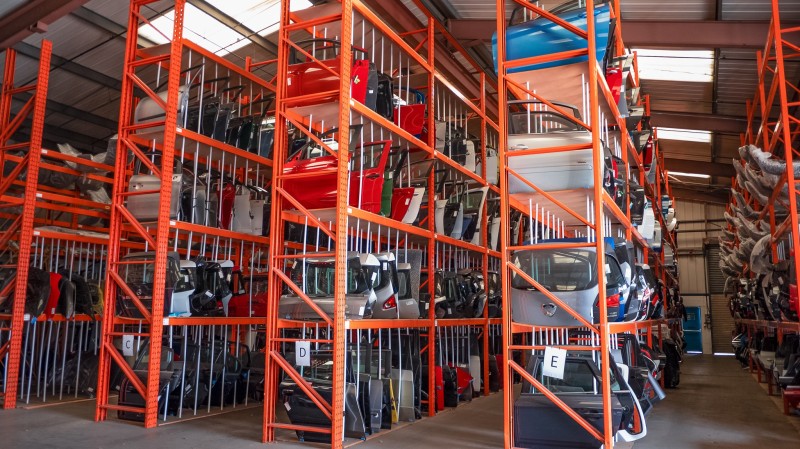
    <content type="html" xml:lang="en"><![CDATA[<p class="page-image pull-right"><span><img src="https://www.asm-autos.co.uk/image/4/800/800/images/asm-car-parts-racking-in-warehouse.jpg" style="width: 400px;" width="400" height="224" alt="ASM car parts racking in warehouse" class="img-responsive center-block" loading="lazy" title="ASM car parts racking in warehouse"/></span></p><p>It’s a fact of life that cars break down or need repairs.  As much as manufacturers try to design and make highly reliable cars, the wear and tear from consistent use means auto parts are susceptible to faults.  Worse still, accidents on the road are often unavoidable. Sometimes you and your vehicle may be involved in a prang where another driver is at fault.</p><p>At some point you will have to shop for a new car part. Whatever that part may be, there’s a fair chance you might feel a bit intimidated.  After all, this is your car: something you rely on every day.</p><p>To help, here’s how to find parts for your car.</p><h2>Which auto parts can I buy?</h2><p>Depending on the value of your vehicle, if it develops faults or is involved in an accident, it might not be cost-effective to purchase brand-new replacement car parts to keep your vehicle roadworthy.  That’s where <a href="https://www.asm-autos.co.uk/used-car-parts/">second-hand car parts</a> come in: an economical choice that’s kinder to the environment too.</p><p>You can buy pretty much every car part second-hand.  At the online parts store of ASM Auto Recycling we sell everything from gear sticks to <a href="https://parts.asm-autos.co.uk/engines/">whole engines</a>.  If you’re at all unsure whether we’ve got the part you need, you can get in touch, but it’s fairly safe to assume you will be able to get a replacement.</p><p class="page-image pull-right"><span><img src="https://www.asm-autos.co.uk/image/4/800/800/images/asm-parts-delivery-ev-van.jpg" style="width: 400px;" width="400" height="300" alt="ASM green parts delivery EV van" class="img-responsive center-block" loading="lazy" title="ASM green parts delivery EV van"/></span></p><h2>Wouldn’t new car parts be better?</h2><p>As with most things there are pluses and minuses to both.</p><p>With new auto parts, you’ll pay more, but you’re likely to get a bit of additional security.  For some drivers, that’s worth the extra cost.</p><p>Second-hand auto parts – as with <a href="https://www.asm-autos.co.uk/online-salvage-auction/">second-hand vehicles</a> – are usually cheaper.  What’s more, you can also usually track down the part specific to your car, even if it’s an older model.</p><h2>How to find the correct parts for my car</h2><p>There are a number of things you’ll need to look at when identifying the right part for the make and model of your car. It’s trickier than it sounds. Even a single range of vehicles from a manufacturer will have a number of versions that have been produced over time, with parts differing through the years and as technologies develop.</p><ul>
<li><p><strong>Vehicle identification number (VIN)</strong> – finding your VIN number is your first port of call. This is a number that specifically relates to your car, and can be used to locate the right part. Your VIN number can be found in the chassis of your vehicle, usually in the engine bay or beneath the plastic trim around the driver or passenger door opening. The VIN is also listed in car manufacturer’s data tables and with the <a href="https://www.gov.uk/government/statistical-data-sets/vehicle-licensing-statistics-data-files">DVLA</a>.</p></li>
<li><p><strong>Make, model and year</strong> – knowing these basic manufacturing details about your car will help when you are searching for parts online.</p></li>
<li><p><strong>Part codes</strong> – on some occasions, the faulty part itself will have a code, though you might need to dig through the dirt and grease to see it. This can also be referred to as the part number for your car.</p></li>
<li><p><strong>Visual ID</strong> – experienced buyers might be able to identify the part they need simply by looking at the faulty part. If you’re not sure though, check with your local garage or dealer.</p></li>
<li><p><strong>Part comparison</strong> – it can be possible to take the part you’ll be replacing and to simply compare it to the parts available online or at your local parts store. You’ll need to be detailed in checking, though: it can help to consult those who actually work at your local dealer, as they might be able to help.</p></li>
</ul><h2>Where can I find the right car parts?</h2><p>The <a href="https://www.asm-autos.co.uk/used-car-parts/">second hand parts store</a> at ASM Auto Recycling includes a wide, ever-changing range of parts.  However, we know that we’re not going to have every single part our customers need, every single time.  So, here are a few other options to consider:</p><ul>
<li><p><strong>Swap meets</strong><br/>
The used car enthusiast market is always popular and as a result you can actually attend meetings where fans will swap parts with each other. Get online and see if you’ve got one that’s local.</p></li>
<li><p><strong>Dealers</strong><br/>
Going down this route will often be more expensive, but they will nearly always be able to source a part if you’re happy to pay extra.</p></li>
<li><p><strong>Forums</strong><br/>
Really stumped?  Head online and check out one or two of the car enthusiast forums.  Forums often have a ‘buy or sell’ section, and you might find what you’re looking for.</p></li>
<li><p><strong>eBay</strong><br/>
Although it can be risky buying through eBay, you may just find what you’re looking for.  It’s obviously important to ensure you research the seller’s feedback and reputation.</p></li>
</ul><p class="page-image pull-right"><span><img src="https://www.asm-autos.co.uk/image/4/800/800/images/asm-parts-quality-control-area.jpg" style="width: 400px;" width="400" height="224" alt="ASM parts quality control area" class="img-responsive center-block" loading="lazy" title="ASM parts quality control area"/></span></p><h2>Should I replace the car parts myself?</h2><p>Depending how DIY savvy you are, it is perfectly possible to replace car parts yourself.  However, it’s best to be cautious.  If you get something wrong, the consequences can be serious, if not fatal.</p><p>It’s also worth bearing in mind that if you get something badly wrong, you’ll definitely end up with much bigger bills than the replacement car part would have cost you.</p><h2>The car parts you shouldn’t buy second-hand</h2><p>Unless salvaged from an almost new vehicle and from a reputable seller, there are some car parts that you should be wary of buying second-hand.  These are parts which will decline in efficiency and performance quicker the older they get.  It’s therefore advisable to purchase the following parts brand-new:</p><ul>
<li><p><strong>Exhaust systems</strong><br/>
As exhausts get older, the chances of them developing fissures, cracks and even holes are significantly greater.  Second-hand exhaust systems will not last long!</p></li>
<li><p><strong>Wiper blades</strong><br/>
Used wiper blades from end-of-life vehicles are never a good choice.  They’re already crammed with grime and dirt and it’s difficult to ever get them truly clean again.</p></li>
<li><p><strong>Oil filters</strong><br/>
In any vehicle, oil filters have limited shelf-lives.  Oil is a necessity for your engine but, if you use a second-hand filter, the chance of your oil becoming dirty and damaging other components is much higher.</p></li>
<li><p><strong>Brake plates</strong><br/>
Brake plates will always wear out over time.  So, if you purchase second-hand brake plates you will have to accept these will have a very limited lifespan.  That’s because the friction applied by the callipers to the brake plates is so great.</p></li>
</ul><h2>Find used car parts at ASM</h2><p>Purchasing second-hand used car parts can absolutely save you money on your motoring in the long run and is the greener solution.</p><p>In our <a href="https://www.asm-autos.co.uk/used-car-parts/">used car parts</a> store you can search by your car registration, make and model and find all the parts that we have available for your vehicle. All of our recycled car parts are cleaned, tested where possible and covered by our 90-day parts-only guarantee.</p>]]></content>
  </entry>
  <entry>
    <title>How to Replace your Serpentine Belt</title>
    <link rel="alternate" type="text/html" href="https://www.asm-autos.co.uk/blog/how-to-replace-your-serpentine-belt/"/>
    <id>tag:www.asm-autos.co.uk,2011-01-03:blog.1318</id>
    <updated>2024-04-19T16:56:00+01:00</updated>
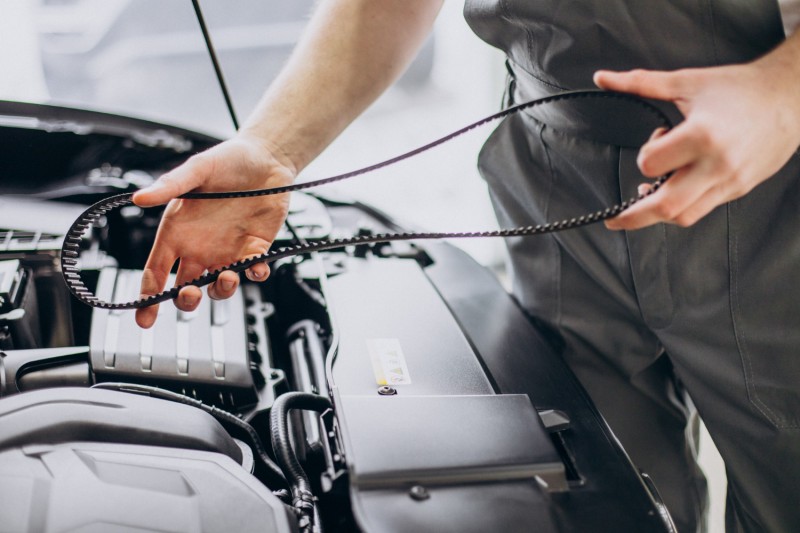
    <content type="html" xml:lang="en"><![CDATA[<p>If you know your way around a car’s engine, then you’ll know what a serpentine belt (or drive belt) is. Automatic belt tensioners are now standard in most cars, so replacing a serpentine belt is <a href="/blog/the-9-most-common-car-engine-problems-revealed/">one of those jobs</a> that it is possible to do yourself.</p><p>Here’s our DIY guide to how to change your serpentine belt.</p><p class="page-image pull-right"><span><img src="https://www.asm-autos.co.uk/image/4/800/800/images/mechanic-holding-car-engine-belt-part.jpg" style="width: 400px;" width="400" height="266" alt="Mechanic holding car engine belt part" class="img-responsive center-block" loading="lazy" title="Image by senivpetro on Freepik" data-toggle="tooltip" data-placement="bottom"/></span></p><h2>What is a serpentine belt?</h2><p>A serpentine or drive belt is important in a car because it transfers power from the engine’s crankshaft to numerous key components of the vehicle, such as the alternator, air conditioning compressor, power steering pump and water pump. But the belt will wear with age and can develop cracks, so it might need to be replaced during the lifetime of the vehicle.</p><p>Older or <a href="/blog/classic-cars-to-be-made-exempt-from-mots/">classic cars</a> will have multiple belts and should be replaced by a professionally trained mechanic.</p><h2>How will I know it’s time to replace my serpentine belt?</h2><p>Most belts last between 50,000-100,000 miles. If you hear a squealing or squeaking sound coming from your engine, then chances are it is your serpentine belt slipping and sliding. This means it is wearing out and you should get it replaced as soon as possible.</p><h2>Before you start …</h2><h3>Check the tensioner belt</h3><p>It’s important to ensure that the tensioner itself is where it needs to be before you think about swapping the belt around: a good tensioner belt needs to exhibit a slight vibration of around 1/32 inches or less of movement, and the belt should be able to move smoothly, with no jerks or visible vibration. If this isn’t the case, then the tensioner is bad, and will need to be replaced first. This is not a DIY task – take it to a mechanic!</p><h3>Check the belt actually needs replacing</h3><p>Typically, serpentine belt cracking is most likely in older belts. If you’ve got cracks in more than three adjacent ribs of the belt that are bigger than an inch or so – or there are four or more cracks per inch on one of the ribs – then the belt will need replacing. It will also need replacing if you notice any of the following:</p><ul>
<li>Chunks missing from the ribs</li>
<li>Torn or frayed fabric</li>
<li>Glazing on the belt’s back</li>
<li>Debris trapped anywhere in the ribs</li>
</ul><p>In the case of more recent belts, cracking is less common and you’re better off looking for wear. Wear is harder to locate than cracking, but there are actually smartphone apps that can detect wear, or you can use a conventional belt wear gauge.</p><h3>Where does the serpentine belt go?</h3><p>Each belt will snake round the engine in a different way, so make sure you know where to put the serpentine belt replacement. Check your car’s manual for a schematic diagram of the belt or search online. It may also be worth taking some photos of the engine from different angles.</p><h2>Changing your serpentine belt: step by step</h2><h3>Remove the old belt</h3><p>First you will need to release the tensioner which keeps the belt taut as the car is moving. Use the serpentine hand belt tool to rotate the tensioner in order to remove tension from the belt. You might need a ratchet or breaker bar to do this, or a socket on the pulley. The belt should be fairly easy to remove but take care not to disturb any of the pulleys. Slowly release the tensioner once the belt is off.</p><h3>Check for misalignment and other signs of damage</h3><p>This is a good opportunity to check for any signs of misalignment on the old belt. These won’t be fixed by replacing the belt. If there is any disintegration along the edges and separated ribs, then you could have misalignment issues. Remove any dirt and grime from the pulleys and look for oil leaks. Check the tensioner pulleys are spinning correctly – they shouldn’t make a noise when they spin. If there is any excessive movement on the pulleys, from side to side or in and out, they will fail and so will your drive belt, meaning instant loss of power to the vehicle.</p><h3>Install the new belt</h3><p>Using the belt tensioner tool, you can then route the new belt around the belt path. The belt will usually need to go first around the crankshaft pulley, and then the grooved ones. Finish the job by sliding the belt into a rounded, non-grooved, smooth roller. Make sure the belt is completely on and centred on each pulley and tighten the pulley with the tensioner tool. Slowly release the tensioner and start the engine. Keep the engine idling for a minute or so to make sure the new serpentine belt is working as it should.</p><h2>Changing a serpentine belt FAQs</h2><h3>What tools do you need to replace a serpentine belt?</h3><p>You will just need a new belt, a belt tensioner tool and a socket wrench to replace your serpentine belt.</p><h3>How long does it take to change a serpentine belt?</h3><p>If you have the right tools and do some basic prep it should take about 15 minutes to put a new serpentine belt on. If you want to know more about doing more car maintenance yourself, we have a range of <a href="/blog/category/car-maintenance/">handy guides</a>.</p><h2>Find engine parts at ASM</h2><p>Here at <a href="https://www.asm-autos.co.uk/">ASM Auto Recycling</a>, we can help with your search for replacement parts for your car. In our <a href="https://www.asm-autos.co.uk/used-car-parts/">used car parts</a> store you can search by your car registration, make and model and find all the parts that we have available for your vehicle. These include oil filters, fuel system parts, engine and transmission parts. You can also use our <a href="https://parts.asm-autos.co.uk/part-info-request/">parts enquiry form</a>. Plus, we offer a 90-day parts peace of mind guarantee for fitting used replacement engines or car parts purchased from ASM.</p>]]></content>
  </entry>
  <entry>
    <title>Basic Car Maintenance: How to change your spark plugs</title>
    <link rel="alternate" type="text/html" href="https://www.asm-autos.co.uk/blog/basic-car-maintenance-how-to-change-your-spark-plugs/"/>
    <id>tag:www.asm-autos.co.uk,2011-01-03:blog.1274</id>
    <updated>2024-03-06T12:16:00+00:00</updated>
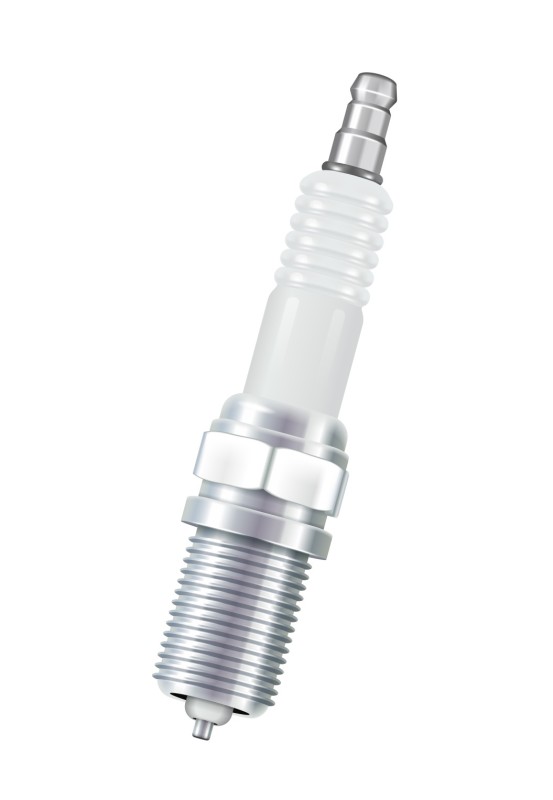
    <content type="html" xml:lang="en"><![CDATA[<p>An essential part of your engine’s operation, spark plugs are something which you can replace yourself with relative ease.</p><p class="page-image pull-right"><span><img src="https://www.asm-autos.co.uk/image/4/800/800/images/spark-plug_1.jpg" style="max-height: 400px;" width="276" height="400" alt="Spark plug" class="img-responsive center-block" loading="lazy" title="Image by macrovector on Freepik" data-toggle="tooltip" data-placement="bottom"/></span></p><p>When the engine fires, the spark causes the ignition cycle to begin. As this happens every time you start your car, the metal in the plugs will inevitably burn out over time. As this happens, eventually the gap between the electrodes becomes too vast for the spark to travel, leading to misfires, weak acceleration and poor mileage.</p><p>Replacing your spark plugs regularly can help your vehicle run at peak performance and save you from costly repairs in the future.</p><h2>How do I know if my spark plugs need changing?</h2><p>There are several warning signs which you can watch out for that will let you know if your spark plugs need changing, including:</p><ul>
<li>Difficulty in starting the car</li>
<li>Relatively poor fuel economy</li>
<li>Knocking or rattling noises <a href="/blog/the-9-most-common-car-engine-problems-revealed/">coming from your engine</a></li>
<li>Your car struggles to accelerate</li>
<li>Occasional or frequent misfiring</li>
</ul><h2>What equipment do you need to change spark plugs?</h2><p>To change your plugs, you’ll need the following tools:</p><ul>
<li>Clean rag or paper towels</li>
<li>Socket</li>
<li>Gap tool</li>
<li>Replacement plugs</li>
<li>Ratcheting socket wrench</li>
<li>Socket wrench extension</li>
<li>Torque wrench</li>
<li>Vacuum cleaner or compressed air blower</li>
<li>You’ll also need a flat, well-ventilated area (like a garage or driveway)</li>
</ul><h2>Which spark plugs do you need?</h2><p><em>NOTE. If you have a standard engine, the process is relatively simple. However, some more advanced V-6 and above engines have more difficult replacing procedures, so</em> <a href="/contact-us/"><em>consult an expert</em></a> <em>if you’re ever unsure.</em></p><ol>
<li>Disconnect the battery terminal and any covers, if required.</li>
<li>Clean the area around the plug to ensure dirt and grime can’t fall into the pocket or engine.</li>
<li>Remove the spark plug boots. You’ll need to do this one at a time, and mark which wires go to which plug as you go.</li>
<li>Remove the plugs one at a time and inspect them for damage.</li>
</ol><h3>Installing new spark plugs</h3><ol>
<li>After removing the old plugs, check to see whether they need cleaning, or if they need replacing.</li>
<li>If the centre electrode in the spark plug is still even and correctly shaped, it might not need replacing immediately.</li>
<li>To replace older plugs, use the socket extension to thread the new plugs back into the engine.</li>
<li>Use a torque wrench to tighten the spark plugs to the specification for your vehicle.</li>
<li>Reattach the plug boots to the correct plug mates.</li>
<li>Reconnect the battery and start your car.</li>
<li>Should you have any issues beyond this point, or the car won’t start, please contact a specialist immediately.</li>
</ol><p>Replacing the spark plugs in your car is a great way to keep costs down when it comes to maintaining your vehicle. Discover other <a href="/blog/category/car-maintenance/">maintenance advice</a>, like <a href="/blog/car-cleaning-tips/">car cleaning tips</a> or what the most <a href="/blog/the-9-most-common-car-engine-problems-revealed/">common car engine problems</a> look like, with ASM Autos.</p><p>Disclaimer: We are not responsible for your use of the information contained in or linked from this guide.</p>]]></content>
  </entry>
  <entry>
    <title>The complete guide to replacing a fuel filter</title>
    <link rel="alternate" type="text/html" href="https://www.asm-autos.co.uk/blog/the-complete-guide-to-replacing-a-fuel-filter/"/>
    <id>tag:www.asm-autos.co.uk,2011-01-03:blog.1297</id>
    <updated>2024-02-07T11:50:00+00:00</updated>
    <content type="html" xml:lang="en"><![CDATA[<p>A fuel filter is one of those components in your car that do a quiet but important job, ensuring that your engine runs effectively and smoothly. Here’s our guide to fuel filter replacement if you fancy doing it yourself at home.</p><p class="page-image pull-right"><span><img src="https://www.asm-autos.co.uk/image/4/800/800/images/car-mechanic-working-in-a-garage.jpg" style="width: 400px;" width="400" height="257" alt="Car mechanic working in a garage" class="img-responsive center-block" loading="lazy" title="Image by standret on Freepik" data-toggle="tooltip" data-placement="bottom"/></span></p><h2>What is the fuel filter and why is it important?</h2><p>You can locate the fuel filter either in the fuel tank itself or in the fuel lines between the tank and the fuel pump. If you are unsure check your vehicle manual to locate it. The fuel filter prevents debris, dirt, dust and other particulates from entering the fuel system, contaminating the engine and affecting performance. Over time the filter itself will become clogged, obstructing the flow of fuel to the engine.</p><h2>When should I change my fuel filter?</h2><p>Your fuel filter should be good for at least 30,000 miles on older cars and perhaps even double that on more modern vehicles. So, you may only have to change a fuel filter once every 5-10 years, depending on how much you drive.</p><h2>How will I know I need to replace my fuel filter?</h2><p>A bad fuel filter is one of the things to <a href="/blog/the-9-most-common-car-engine-problems-revealed/">keep an eye on in your engine</a>. There will be a few tell-tale signs that it’s time for a car fuel filter replacement.</p><p>Starting the car may take longer than usual, or it could be misfiring, struggling to accelerate, being unresponsive or stalling. A faulty fuel filter could be the cause of a fuel system component failure. Loud noises from the fuel pump could be your car’s way of telling you something is wrong.</p><h2>Can I replace my fuel filter myself?</h2><p>Replacing the fuel filter is something that you can do yourself if you are confident working with car engines and components. If not, you should get a fuel filter changed at your local garage by a professionally trained mechanic.</p><h2>What to do before replacing fuel filter?</h2><p>Firstly, make sure your vehicle is parked on a solid, level surface. Have a fire extinguisher available, as you will be working with the fuel system, and petrol or diesel is very flammable. Wear eye protection, gloves and old clothing as you are likely to get messy replacing a fuel filter.</p><p class="page-image pull-right"><span><img src="https://www.asm-autos.co.uk/image/4/800/800/images/female-mechanic-repairing-a-car.jpg" style="width: 400px;" width="400" height="266" alt="Female mechanic repairing a car" class="img-responsive center-block" loading="lazy" title="Image by peoplecreations on Freepik" data-toggle="tooltip" data-placement="bottom"/></span></p><h2>How do you change a fuel filter step by step?</h2><p>We have to emphasise that you should only attempt a filter replacement if you are a confident amateur mechanic and <a href="/blog/basic-car-maintenance-how-to-change-your-engine-oil/">know your way around an engine</a>.</p><ol>
<li><p>Relieve the pressure in the fuel system by loosening the fuel cap, and then remove the fuel pump fuse or relay (for the location of these, check your owner’s manual). Start and run the engine until the fuel in the lines is used up and the engine stops working. Then, crank the engine for a couple of seconds to remove any remaining pressure.</p></li>
<li><p>Disconnect the negative battery cable from the battery.</p></li>
<li><p>Find the fuel filter in the engine compartment or beneath the vehicle near the fuel tank (you may need to raise the rear of the vehicle and then support it with jack stands). Then, disconnect the fuel lines from the fuel filter.</p></li>
<li><p>Remove the mounting bolts on the fuel filter (if your car has them).</p></li>
<li><p>Once you’ve verified that you have the correct replacement filter, install it, ensuring that the flow arrow is pointing towards the engine. Re-install the mounting bolts if applicable.</p></li>
<li><p>Fit the lines back onto the new fuel filter and re-install the fuel pump fuse. Then, re-connect the negative battery cable.</p></li>
<li><p>Start your engine and check it for fuel leaks. On some occasions, the engine might not start easily on the first attempt due to a lack of fuel, but as the pressure increases and the fuel reaches the injectors, it should start to get back to normal.</p></li>
<li><p>Give the car a quick test drive to check everything’s running as it should be.</p></li>
</ol><h2>How many hours does it take to change a fuel filter?</h2><p>If you know what you’re doing, it shouldn’t take too long for a fuel filter replacement. You should be able to complete the job in 30-45 minutes at the most.</p><h2>Find fuel system parts for your car at ASM</h2><p>Here at ASM Auto Recycling, we can help with your search for replacement parts for your car. In our <a href="https://www.asm-autos.co.uk/used-car-parts/">used car parts</a> store you can search by your car registration, make and model and find all the parts that we have available for your vehicle. These include fuel system parts, engine and transmission parts. You can also use our <a href="https://parts.asm-autos.co.uk/part-info-request/">parts enquiry form</a>. Plus, we offer a 90-day parts peace of mind guarantee for fitting used replacement engines or car parts purchased from ASM.</p>]]></content>
  </entry>
</feed>