<?xml version="1.0" encoding="UTF-8"?>
<feed xmlns="http://www.w3.org/2005/Atom">
  <title>Category: Environment | Our Scrappage, Recycling and Car Blog | ASM Auto Recycling</title>
  <link href="https://www.asm-autos.co.uk/"/>
  <updated>2025-03-19T10:50:00+00:00</updated>
  <author>
    <name>ASM Auto Recycling</name>
  </author>
  <id>tag:www.asm-autos.co.uk,2011-01-03:blog</id>
  <link rel="alternate" type="text/html" hreflang="en" href="https://www.asm-autos.co.uk/blog/category/environment/"/>
  <link rel="self" type="application/atom+xml" href="https://www.asm-autos.co.uk/blog/feed/environment/"/>
  <rights>Copyright ©, ASM Auto Recycling</rights>
  <entry>
    <title>CO2 emissions and the automotive industry</title>
    <link rel="alternate" type="text/html" href="https://www.asm-autos.co.uk/blog/car-co2-emissions/"/>
    <id>tag:www.asm-autos.co.uk,2011-01-03:blog.1374</id>
    <updated>2025-03-19T10:50:00+00:00</updated>
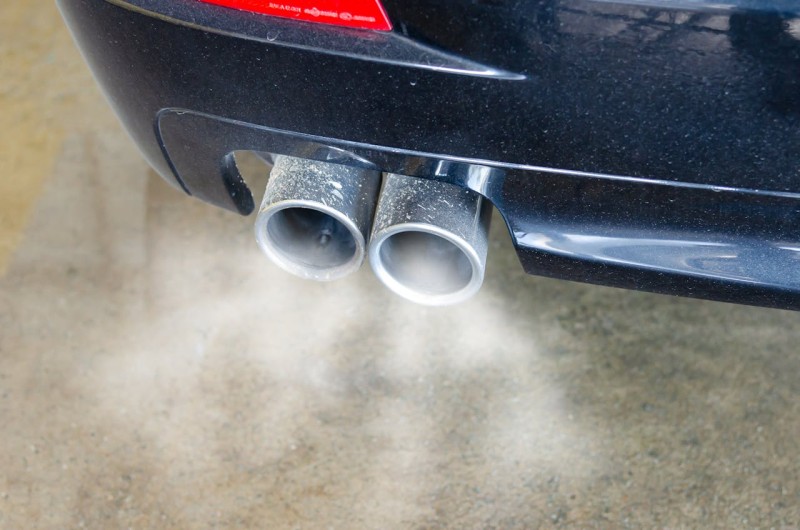
    <content type="html" xml:lang="en"><![CDATA[<p class="page-image pull-right"><span><img src="https://www.asm-autos.co.uk/image/4/800/800/images/pexels-khunkorn-laowisit-1359149-5233284.jpg" style="width: 400px;" width="400" height="265" alt="Fumes emitting from a car exhaust" class="img-responsive center-block" loading="lazy" title="Photo by Khunkorn Laowisit on Pexels" data-toggle="tooltip" data-placement="bottom"/></span></p><p>Ever wondered what carbon dioxide (CO2) emissions are generated by your vehicle? You might not be aware that CO2 emissions can influence the amount of car tax you pay, as well as the rate of company car tax for fleet users.</p><p>Although there is a growing demand for hybrid or electric vehicles (<a href="https://www.zap-map.com/ev-stats/ev-market/">At the end of 2024 there were more than 1,360,000 battery powered electric vehicles in the UK</a>), most cars on the road today still have petrol or diesel engines. When your engine is running, your vehicle’s fuel mixes with the air in the engine to generate the power needed to drive. Because petrol and diesel naturally contain a lot of carbon, burning them produces carbon dioxide gas which is then emitted into the atmosphere via the exhaust pipe.</p><p>Before any car, van, or other vehicle type is put on sale, its fuel economy and CO2 emissions levels are tested and measured. The levels of CO2 emitted by each vehicle are recorded as units of g/km (grams per kilometre) which are then used to calculate the amount of vehicle tax you as the owner will need to pay.</p><h2>Car CO2 emissions</h2><p>Transport is said to be the biggest contributor to CO2 emissions in the UK, with <a href="https://assets.publishing.service.gov.uk/media/67a30e4f7da1f1ac64e5feb1/2023-final-greenhouse-gas-emissions-statistical-release.pdf">29% of all Carbon Dioxide emissions in 2023 coming from the transport sector</a>. With the focus shifting towards sustainability and creating more environmentally friendly models, many people are considering switching their current vehicle to a lower emission model.</p><p>You can check the CO2 emissions of your current vehicle and which tax bracket it falls under using the <a href="https://www.gov.uk/vehicle-log-book">V5C document</a>.</p><h3>CO2 emissions and vehicle tax</h3><p>But what is a good CO2 emission for a car? Well, in terms of vehicle tax, generally speaking the lower the CO2 emissions, the cheaper your vehicle tax will be.</p><p>Any vehicles <a href="https://www.gov.uk/vehicle-tax-rate-tables/rates-for-cars-registered-on-or-after-1-march-2001">registered between 1st March 2001 and 31st March 2017</a> will have their tax rates based solely on their CO2 emissions. Any car with an emissions rating of less than 100g/km is exempt from tax, while vehicles with higher CO2 emissions will be taxed accordingly.</p><p>Vehicles registered on or after 1st April 2017, are now taxed on a newer system. Any car with an emissions rating of 0g/km CO2 (electric and hydrogen powered vehicles) are exempt from tax. Hybrid vehicles or cars with super-efficient petrol or diesel engines that produce 50g/km or less of CO2 emissions, also qualify for a reduced tax rate. For the first year, other vehicles will be placed into one of thirteen tax bands and be taxed based on CO2 emissions. This is often included in the purchase price of the car. After the first year, drivers will pay a flat fee of £165 per year.</p><h2>What cars emit the most CO2?</h2><p>While CO2 emissions will vary from model to model, generally cars with larger engines, higher fuel consumption, and older technology will produce higher levels of CO2. These include larger SUVs and trucks, where their size and weight can cause higher CO2 emissions. Similarly, high performance sports or luxury cars which make use of a bigger engine to increase speed or comfort will also produce more CO2 than other types of cars.</p><h2>What causes high CO2 emissions in cars?</h2><p>High CO2 emissions in cars can be due to several factors, including:</p><ul>
<li>Fuel combustion</li>
<li>Engine size and power</li>
<li>Driving behaviour</li>
<li>Lower fuel efficiency</li>
<li>Vehicle weight</li>
</ul><h2>How can I reduce CO2 emissions in my petrol car?</h2><p>As previously mentioned, CO2 emissions can be influenced by numerous factors, some of which are within your control as a driver. Top tips to reduce your CO2 emissions include:</p><ul>
<li>Driving considerately and avoiding sudden acceleration as much as possible.</li>
<li>Monitoring your tyre pressure.</li>
<li>Reducing the overall weight of your vehicle where possible by removing things like roof racks when they’re not being used.</li>
<li>Switching the engine off when you can rather than leaving it running.</li>
<li>When possible, using premium over regular fuel.</li>
<li>Change your cars oil and air filter regularly.</li>
<li>Ensure your vehicle has regular services and maintenance checks.</li>
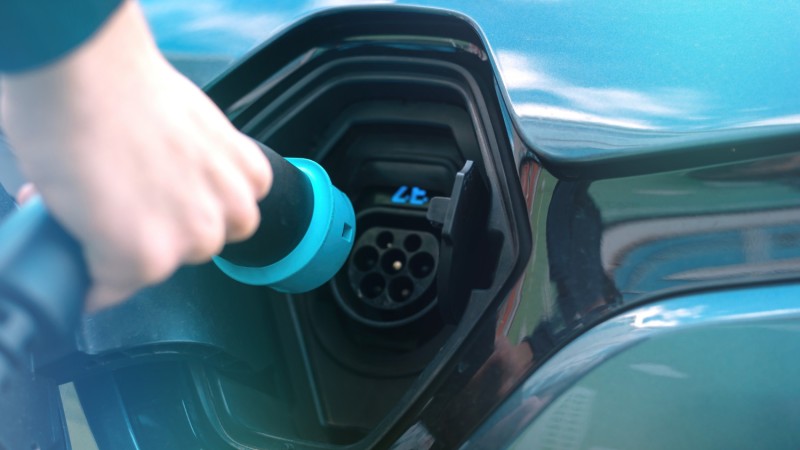
</ul><p>Proactively trying to reduce your car’s CO2 emissions will not only benefit your bank balance. You’ll also be having a positive impact on the environment and getting more miles per gallon.</p><h2>What is classed as a low emission car?</h2><p class="page-image pull-right"><span><img src="https://www.asm-autos.co.uk/image/4/800/800/images/17705.jpg" style="width: 400px;" width="400" height="225" alt="Hand holds a charging cable towards the socket of an electric vehicle" class="img-responsive center-block" loading="lazy" title="Image by frimufilms on Freepik" data-toggle="tooltip" data-placement="bottom"/></span></p><p>A low emission car or vehicle is anything that produces lower levels of carbon dioxide and other greenhouse gases compared to traditional petrol- or diesel-powered cars. Common types of low emission cars include electric vehicles such as Teslas, hybrid, or plug-in hybrid cars. <a href="https://afdc.energy.gov/vehicles/fuel-cell">Fuel cell vehicles (FCVs)</a> are also classed as low emission cars as they generate electricity through a hydrogen fuel cell chemical reaction.</p><h2>Should you choose a low CO2 emission car?</h2><p>There are several benefits to choosing a low CO2 emission car if you can.</p><h3>Environmental impact</h3><p>Naturally, low CO2 emission cars produce fewer greenhouse gases, which can help to improve your carbon footprint as an individual. Cars with low CO2 emissions also have a cleaner combustion process and better fuel efficiency which reduces emissions of other harmful pollutants, such as nitrogen oxides (NOx), particulate matter (PM), and <a href="https://en.wikipedia.org/wiki/Volatile_organic_compound">volatile organic compounds (VOCs)</a>, all of which lead to poorer air quality.</p><h3>Government incentives</h3><p>If you are considering purchasing a low emission vehicle, it’s well worth looking at the various government incentives that you could be eligible for. These can include anything from tax credits to reduced registration fees. For example, <a href="https://www.gov.uk/guidance/electric-vehicle-chargepoint-and-infrastucture-grant-guidance-for-installers#grants-that-are-available-to-your-customers">the Electric Vehicle Homecharge Scheme Grants</a> are available for drivers planning to buy or who already own an electric vehicle and can help to reduce the installation costs of an electric vehicle charger by up to 75%. Applying for government incentives is a great way to help reduce the overall cost of purchasing and owning a low emission car.</p><h3>Higher fuel efficiency</h3><p>All low emission vehicles, but particularly electric or hybrid vehicles, have a higher fuel efficiency compared to higher emission vehicles. This can help owners to reduce their fuel costs throughout their vehicle’s lifetime and reduce the impact that the fluctuations of fuel prices can have.</p><h3>Advanced technology</h3><p>Choosing a low emission car also means you’ll be benefitting from the latest technological advancements in the automotive industry. For example, since they were first developed electric vehicles have seen improvements in their battery range, charging infrastructure, and overall performance. This means that they’re not just great ‘low emission cars’ to own, but also great cars to own in their own right.</p><h2>Scrap your old car with ASM Auto Recycling</h2><p>If you currently own an older, or less efficient vehicle, it might be time to consider scrapping your car in favour of an alternative low CO2 emissions vehicle.</p><p>At ASM Auto Recycling, we’ve been recycling older, inefficient vehicles for more than 40 years. As a permitted Authorised Treatment Facility (ATF) we process all end-of-life vehicles in our state-of-the-art <a href="/vehicle-dismantling/">vehicle dismantling facilities</a> to responsibly remove and store potential toxins and set aside <a href="https://www.asm-autos.co.uk/used-car-parts/">used car parts</a> that can be reused again on other vehicles.</p><p>Better still, we can pay you an industry competitive price for your scrap vehicle. It doesn’t matter whether it has failed its recent MOT or is even a non-runner, we offer a <a href="/vehicle-transport/">salvage car collection</a> service from our main hub in Thame, Oxford, retrieving your car at a time and location to suit you.</p><p>With prompt collection and immediate payment, discover your car’s scrap value today using our <a href="/scrap-my-car/">free car scrap valuation calculator</a>.</p>]]></content>
  </entry>
  <entry>
    <title>Hydrogen Powered Cars in the UK</title>
    <link rel="alternate" type="text/html" href="https://www.asm-autos.co.uk/blog/hydrogen-powered-cars-in-the-uk/"/>
    <id>tag:www.asm-autos.co.uk,2011-01-03:blog.1214</id>
    <updated>2023-10-31T17:30:00+00:00</updated>
    <content type="html" xml:lang="en"><![CDATA[<p class="page-image pull-right"><span><img src="https://www.asm-autos.co.uk/image/4/800/800/images/hydrogen-molecule.jpg" style="width: 400px;" width="400" height="225" alt="Hydrogen molecules graphic" class="img-responsive center-block" loading="lazy" title="Image by FP_atkwork on Freepik" data-toggle="tooltip" data-placement="bottom"/></span></p><p>It was once predicted by the government that there could be 1.5 million hydrogen-powered cars in the UK by 2030. That is unlikely to happen now, but electric cars that run on hydrogen are a viable alternative to battery powered electric vehicles (BEVs) and may also be a greener option too.</p><p>With the sale of new petrol and diesel cars <a href="https://www.gov.uk/government/news/government-sets-out-path-to-zero-emission-vehicles-by-2035">banned after 2035</a>, EVs that run on lithium ion batteries are not the only choice for zero emission driving. In this guide we look at how a hydrogen-powered car works, what refuelling is like and what the future might hold for hydrogen-powered cars.</p><h2>How many hydrogen powered cars are there in the UK?</h2><p>The answer is, not many. In <a href="https://www.thecarexpert.co.uk/why-hydrogen-cars-are-not-the-answer/">January 2023 it was reported</a> that there were 300 hydrogen vehicles on the UK’s roads, but some of these were buses. There are only two models of hydrogen car currently available – the Toyota Mirai and the Hyundai Nexo SUV. There are also fewer than 15 hydrogen refuelling stations in the UK.</p><p>So, in many ways it feels like the hydrogen vehicle sector is in a similar place as battery powered electric cars were 15-20 years ago – very much a new technology, with huge but undeveloped potential.</p><h2>How does a hydrogen powered car work?</h2><p>A hydrogen car works by being powered by a fuel cell, which takes oxygen from the air and combines it with hydrogen from a tank to create electricity. The hydrogen tanks are pressurised and only a small amount of hydrogen is required to produce a significant amount of energy. The only output from a hydrogen fuel cell car is water.</p><h2>Are they better than electric cars?</h2><p>There is an argument to say that hydrogen powered cars are better than BEVs. They are probably <a href="https://www.theecoexperts.co.uk/blog/hydrogen-powered-cars">greener and cleaner</a>, because they don’t require a lithium-ion battery. These batteries are the environmental Achilles heel of the BEV, hybrid and plug-in hybrid type of electric vehicle since they are sourced from non-renewable materials. It means that manufacturing a battery-powered EV generates <a href="https://www.whatcar.com/news/how-green-are-electric-cars-really/n24646">two tonnes more CO2 emissions</a> than an equivalent petrol or diesel vehicle.</p><p>You also don’t have to charge a hydrogen car up so often. A hydrogen powered car has a range of up to 400 miles, and can be fully charged in around five minutes, effectively as quickly as a petrol or diesel vehicle.</p><h2>Can a hydrogen fuel cell explode?</h2><p>Yes, it can. Hydrogen fuel cells are highly pressurised, and hydrogen is explosive if it leaks. There are misconceptions about the dangers of hydrogen, fuelled by images of the 1936 Hindenburg airship disaster. But <a href="https://www.autoexpress.co.uk/electric-cars/93180/hydrogen-cars-do-hydrogen-fuel-cell-or-combustion-cars-have-future">research has shown</a> that hydrogen did not explode during that fire, and the small amounts that would escape from a ruptured tank would probably dissipate into the air almost immediately. In reality hydrogen fuel cell tanks are probably just as safe as petrol tanks, and almost certainly safer than lithium-ion batteries.</p><h2>What happened to the hydrogen car revolution?</h2><p>Hydrogen fuelled cars were being lauded as a viable zero emissions option a decade ago. In 2013 the UK government published a wide-ranging study on the commercial future of hydrogen cars in the UK. It predicted that hydrogen cars could have a 50% share of the UK car market by 2050.</p><p>The Business Minister at the time, Michael Fallon, said that “hydrogen fuel cell electric vehicles can make a significant contribution” to “the transition to ultra-low emission vehicles. Successful commercialisation of the technology will require Government to work in true partnership with industry.”</p><p>There were visions of a ‘hydrogen highway’, and 65 hydrogen filling stations were expected to meet the first wave of hydrogen hungry cars. But it never happened.</p><p>The focus turned fully onto battery powered EVs, and developing a charging infrastructure that today means there are more places in the UK to charge a BEV than a petrol or diesel car. Hydrogen refuelling stations are more expensive and logistically challenging to build than an electric charging point. Keeping them topped up with hydrogen would also entail tankers going up and down motorways, whereas electricity is delivered on demand.</p><h2>What does the future hold for hydrogen fuel cell cars?</h2><p>There seems to be little sign of hydrogen powered cars taking off in the UK anytime soon. The number of refuelling stations are actually going down, new annual registrations are numbered in single figures and manufacturers are not investing in the technology for passenger cars.</p><p>Where there may be a future is in larger vehicles or other forms of transport. Hydrogen is considered one of the leading clean fuels for the shipping and aeronautical industry, where long distances need to be covered on single charges. In terms of road transport, buses are already being powered using hydrogen.</p><h2>Scrap your petrol or diesel car at ASM</h2><p>While hydrogen powered cars may not be the future, zero emissions vehicles will be. Many vehicle owners in the UK may be interested in scrapping or recycling their used petrol or diesel car in favour of a greener alternative. At ASM Auto Recycling we provide <a href="/vehicle-dismantling/">vehicle dismantling</a> and <a href="/asm-guides/car-recycling/">scrap metal processing</a> services for recycling and car scrappage, allowing your vehicle to be dismantled safely. These can be recycled for used car parts that provide a cost-effective alternative for used car owners looking for <a href="https://www.asm-autos.co.uk/used-car-parts/">replacement parts</a>.</p>]]></content>
  </entry>
  <entry>
    <title>The growing interest in eco-friendly cars</title>
    <link rel="alternate" type="text/html" href="https://www.asm-autos.co.uk/blog/the-growing-interest-in-eco-friendly-cars/"/>
    <id>tag:www.asm-autos.co.uk,2011-01-03:blog.1199</id>
    <updated>2023-08-09T09:45:00+01:00</updated>
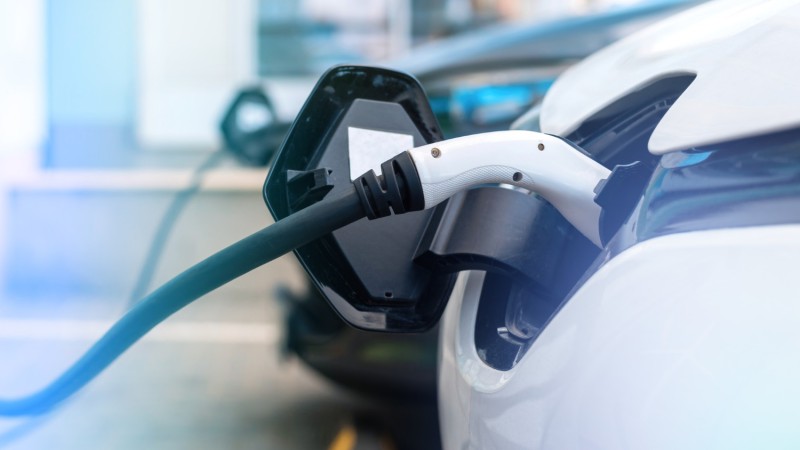
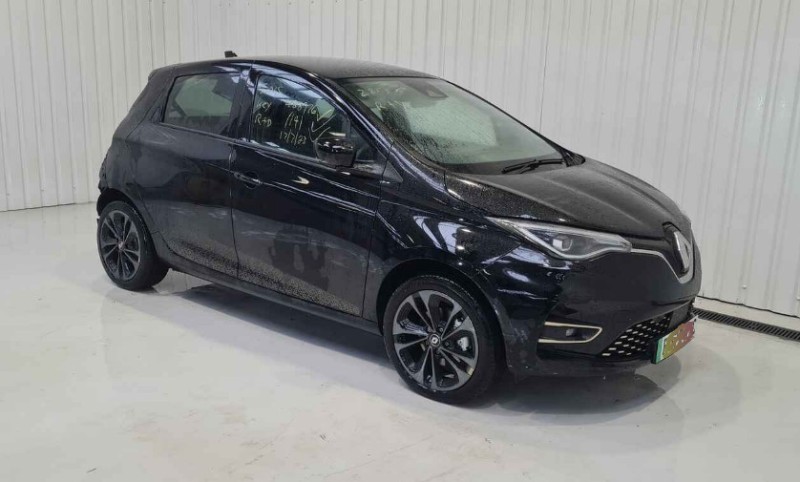
    <content type="html" xml:lang="en"><![CDATA[<p class="page-image pull-right"><span><img src="https://www.asm-autos.co.uk/image/4/800/800/images/plugged-chargers-into-two-electric-cars-charge-station.jpg" style="width: 400px;" width="400" height="225" alt="Chargers plugged into two electric cars at charge station" class="img-responsive center-block" loading="lazy" title="Photo by frimufilms on Freepik" data-toggle="tooltip" data-placement="bottom"/></span></p><p>There is no question that environmentally friendly cars are becoming more popular. In a sense they have to be. In the UK the sale of new petrol and diesel cars are <a href="https://www.gov.uk/government/news/government-takes-historic-step-towards-net-zero-with-end-of-sale-of-new-petrol-and-diesel-cars-by-2030">banned after 2030</a>, so soon an electric vehicle will be the only choice if you want to buy a new car. Consumers are increasingly seeing the environmental and cost benefits of driving an eco vehicle, but what environmental value do they have, how much do they cost, and which are the most common types?</p><h2>How expensive are eco-friendly cars?</h2><p>The biggest issue for people considering buying an electric car is the forecourt price. The <a href="https://octopusev.com/ev-hub/how-much-does-an-electric-car-cost">average price of an electric car in 2022</a> in the UK was £44,000, significantly higher than the equivalent cost of a car with a traditional internal combustion engine. However, the EV market has expanded rapidly in recent years, with a considerable number of luxury models being manufactured having the effect of bumping up average prices.</p><p>In fact, it is possible to buy a new fully electric car for under £30,000 – the entry level Fiat 500 Electric is the cheapest at the time of writing, at just over £20,000; the Nissan Leaf, one of the first environmentally friendly hatchback models, is around £28,000. Of course you don’t have to buy brand new – <a href="/blog/are-you-looking-to-buy-a-used-electric-car/">second hand electric cars are much more affordable</a>. You could pick up an 8-year-old Nissan Leaf for about £6,000.</p><p>The reason that EVs are so expensive is that they are still not manufactured on a scale to compete with petrol or diesel counterparts. But this will inevitably change as more and more eco vehicles are produced, and the price will come down.</p><h2>Are environmentally friendly cars cheaper to run?</h2><p>Yes. Fully electric vehicles have fewer mechanical parts than cars with an internal combustion engine (ICE), so there are fewer parts with <a href="/blog/which-car-parts-need-to-be-replaced-the-most-often/">the potential to fail</a> and need to be repaired. It is estimated that annual servicing and maintenance costs for an eco-friendly car are in the region of £200, 49% lower than an ICE vehicle. Plus, while the price of charging an EV has increased over the last couple of years, both at home and through public charging points, it is still marginally less expensive than filling up with petrol or diesel.</p><p>Another added bonus is the fact that owners of fully electric cars (BEVs) do not pay any <a href="https://www.gov.uk/vehicle-tax-rate-tables">Vehicle Excise Duty</a> (commonly described as ‘road tax’, although roads are paid for through general taxation or toll barriers). Owners of other environmentally friendly cars (plug-in hybrids, hybrids) currently receive a £10 annual discount on their car tax if their cars are more than one year old. However, from 1 April 2025 the free exemption for fully electric cars will end. For EVs after their first year of registration, owners will pay the standard Band 2 VED rate of £180.</p><h2>How ‘green’ are green cars?</h2><p>There is no question that a fully electric or hybrid car will pollute the atmosphere while being driven much less than a car with a diesel or petrol engine, which run on fossil fuels. A fully electric car has zero tailpipe emissions, while a family car in the UK will emit an average of 1.6 tonnes of carbon dioxide per year, <a href="https://www.nimblefins.co.uk/average-co2-emissions-car-uk">according to research</a> by Nimble Fins. So, in this sense, they are as green as they could possibly be.</p><p>The only major concern, ironically, is with the lithium-ion battery, and the way they are sourced. They are made from several rare minerals, which have to be mined and so are non-renewable. A survey by the <a href="https://www.whatcar.com/news/how-green-are-electric-cars-really/n24646">International Council on Clean Transportation</a> found that an EV produced two tonnes more CO2 emissions during its production process than an equivalent ICE vehicle, which would take around a year of driving to offset.</p><p>However, on balance an electric car is by far the greener alternative.</p><h2>The most environmentally friendly cars</h2><p>So, what are the main types of eco cars on the market?</p><p class="page-image pull-right"><span><img src="https://www.asm-autos.co.uk/image/4/800/800/images/2023-renault-zoe-iconic_crop.jpg" style="width: 400px;" width="400" height="241" alt="2023 Renault Zoe Iconic recently at auction" class="img-responsive center-block" loading="lazy" title="2023 Renault Zoe Iconic recently at auction"/></span></p><h3>BEV (battery electric vehicle)</h3><p>Also known as PEVs or pure EVs, a BEV has an electric motor run entirely from the battery. They have <a href="/blog/government-confirms-zero-emissions-target/">zero emissions</a>. Popular BEVs on the second-hand market include the BMW i3, Nissan Leaf, Tesla Model S and Renault Zoe.</p><h3>PHEV (Plug-in hybrid)</h3><p>Perhaps regarded as a stepping stone to a BEV, plug-in hybrids are cars with both an electric motor and a petrol or diesel engine. They use a combination of the two, usually starting a journey from the battery and then moving to the engine once the battery is depleted. <a href="/blog/what-is-the-most-economical-car-i-can-buy/">Popular PHEVs</a> include the Hyundai Ioniq, Kia Niro and Kia Optima.</p><h3>HEV (full hybrid)</h3><p>An HEV is a car with a self-charging battery and a petrol or diesel engine. Full hybrids can only run for a few miles on battery power alone, and they cannot be charged from the mains. They have lower CO2 emissions than a pure ICE vehicle, so there are <a href="https://www.gov.uk/vehicle-tax-rate-tables">tax benefits</a> for the driver.</p><h2>Start your eco-friendly journey by scrapping your petrol car at ASM</h2><p>Many vehicle owners in the UK may be interested in scrapping or recycling their used car in favour of a more eco-friendly, cost-effective green car. At ASM Auto Recycling we provide <a href="/vehicle-dismantling/">vehicle dismantling</a> and <a href="/asm-guides/car-recycling/">scrap metal processing</a> services for recycling and car scrappage, allowing your vehicle to be dismantled safely. These can be recycled for used car parts that provide a cost-effective alternative for used car owners looking for <a href="https://www.asm-autos.co.uk/used-car-parts/">replacement parts</a>.</p><p>Why not earn some money for scrapping or recycling your used car today and put it towards that eco car you’ve set your sights on? You can sell your car to ASM today and get same day cash. Use our online form to <a href="https://sell-your-car.asm-autos.co.uk/scrap-my-car/">get an instant quote</a>.</p>]]></content>
  </entry>
</feed>