<?xml version="1.0" encoding="UTF-8"?>
<feed xmlns="http://www.w3.org/2005/Atom">
  <title>Category: Safety | Our Scrappage, Recycling and Car Blog | ASM Auto Recycling</title>
  <link href="https://www.asm-autos.co.uk/"/>
  <updated>2025-05-26T16:24:00+01:00</updated>
  <author>
    <name>ASM Auto Recycling</name>
  </author>
  <id>tag:www.asm-autos.co.uk,2011-01-03:blog</id>
  <link rel="alternate" type="text/html" hreflang="en" href="https://www.asm-autos.co.uk/blog/category/safety/"/>
  <link rel="self" type="application/atom+xml" href="https://www.asm-autos.co.uk/blog/feed/safety/"/>
  <rights>Copyright ©, ASM Auto Recycling</rights>
  <entry>
    <title>What is the most stolen car in the UK?</title>
    <link rel="alternate" type="text/html" href="https://www.asm-autos.co.uk/blog/the-most-stolen-cars-in-uk/"/>
    <id>tag:www.asm-autos.co.uk,2011-01-03:blog.1386</id>
    <updated>2025-05-26T16:24:00+01:00</updated>
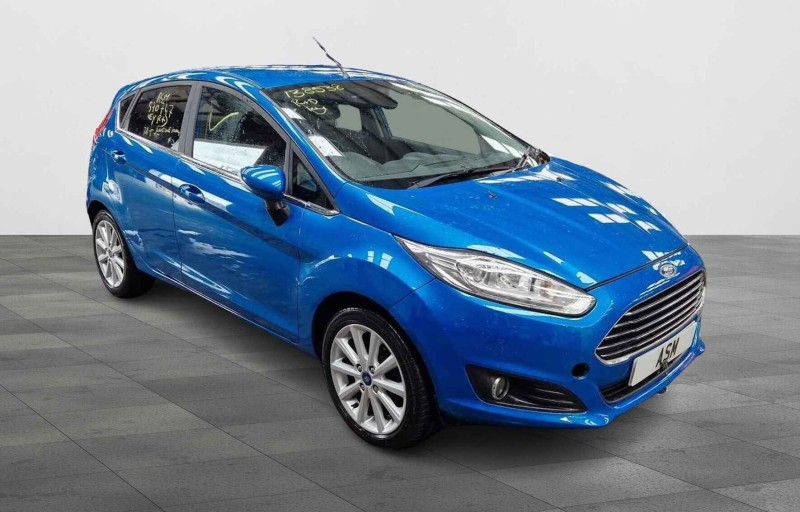
    <content type="html" xml:lang="en"><![CDATA[<p>Data released by the DVLA has revealed the cars most targeted by thieves in 2024. The <a href="https://www.fleetnews.co.uk/news/most-stolen-cars-revealed-in-new-dvla-data">report also shows</a> that while car theft fell by 6% year on year in the UK, there is also twice as much car theft as 10 years ago.</p><p>In total, 61,343 cars were stolen during the year. When you put that number into context, that adds up to 168 per day, and 7 per hour.</p><h2>The Ford Fiesta is the most stolen car in the UK</h2><p class="page-image pull-right"><span><img src="https://www.asm-autos.co.uk/image/4/800/800/images/ford-fiesta-2016.jpg" style="width: 400px;" width="400" height="256" alt="Ford Fiesta 2016" class="img-responsive center-block" loading="lazy" title="Ford Fiesta 2016 recently at auction" data-toggle="tooltip" data-placement="bottom"/></span></p><p>It is an accolade no car wants, but the Ford Fiesta was stolen 4,446 times in 2024 – that’s more than double the next highest on the list. Why is this the case?</p><p>One of the main reasons is that Ford stopped production of the model in 2023, which has led to an increase in the demand and price of <a href="https://www.asm-autos.co.uk/used-car-parts/">spare parts</a>. Thieves are just as likely to strip Fiestas of their parts as sell the complete car on. Fiestas also have a keyless entry system, which have become notoriously vulnerable to criminals. Fiestas are one of the most common cars on the road, so get involved in a higher number of accidents, and need more spare parts, so it is perhaps to be expected just how much they are targeted by thieves.</p><p>The spike in Fiesta theft even made the <a href="https://www.bbc.co.uk/news/articles/cp822jyz8n4o">news headlines</a>.</p><h2>Other commonly stolen cars</h2><h3>Volkswagen Golf</h3><p>The VW Golf is second on the most stolen list, with 1,731 cars reported stolen.</p><h3>Ford Focus</h3><p>Another Ford model, the Focus, is in the slipstream of the Golf – it was stolen 1,700 times in 2024.</p><h3>BMW 3 series</h3><p>The BMW 3 series came next, with 1,371 vehicles stolen. BMWs are highly sought after because they are made by a prestige manufacturer, are fast, powerful and hold the road well.</p><h3>Toyota RAV4</h3><p>The Toyota RAV4 was stolen 1, 260 times.</p><h2>Ways to protect your car from being stolen</h2><h3>Guard against relay attacks</h3><p>What all these makes and models of car have in common is that they are operated with a keyless entry system. Sensors in the vehicle detect the presence of the fob and allow you to open the car door without actually using a key. You can also start the engine by pressing a button.</p><p>Keyless entry systems are vulnerable to relay attacks, which criminals use to amplify the radio frequency signal from the keyfob, in order to get access to the vehicle remotely. The best way to protect yourself from relay attacks is to keep the keyfob in a Faraday pouch, which blocks the RFID signal. Faraday pouches are widely available to buy. Metal cases also do this job effectively too.</p><h3>Strengthen your in-car security</h3><p>Consider installing an immobiliser or tracking device, or securing your steering wheel with a locking mechanism.</p><h3>Park in well-lit areas</h3><p>Make sure you park your car somewhere that’s well-lit, in an area with good CCTV coverage. Off-street parking isn’t available to everyone, but if you can, leave your car overnight in a garage or secure private car park.</p><h3>Don’t invite thieves into your car</h3><p>Hide valuable items from view if they are in the vehicle, and try to keep the vehicle tidy inside. A cluttered car full of stuff might make a criminal curious as to what else might be in the motor. Better still, don’t leave valuables in a car for any length of time.</p><h2>If the worst happens, ASM can help</h2><p>Should you be unlucky enough to be a victim of car theft, and your vehicle is recovered, ASM Auto Recycling can help. We have a modern fleet of 25 <a href="/vehicle-transport/">multi-vehicle car transporters</a>, offering the most efficient way to carry salvage, accident-damaged or stolen-recovered vehicles back to our depots. We can also help with your search for replacement parts in our <a href="https://www.asm-autos.co.uk/used-car-parts/">used car parts</a> store. Search by car registration, make and model.</p>]]></content>
  </entry>
  <entry>
    <title>How to prevent catalytic converter theft</title>
    <link rel="alternate" type="text/html" href="https://www.asm-autos.co.uk/blog/how-to-prevent-catalytic-converter-theft/"/>
    <id>tag:www.asm-autos.co.uk,2011-01-03:blog.898</id>
    <updated>2020-02-24T12:30:00+00:00</updated>
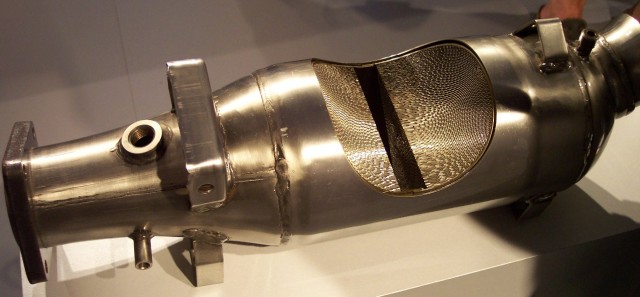
    <content type="html" xml:lang="en"><![CDATA[<p>In this article, we take a look at the rise in thefts of catalytic converters, why this may have occurred, and, more importantly, how you can prevent catalytic converter theft happening to your vehicle. Plus, find out about what to do if you are affected by this type of theft.</p><p><span><img src="https://www.asm-autos.co.uk/workspace/images/cross-section-of-a-catalytic-converter.jpg" style="width: 600px;" width="600" height="278" alt="Cross-section of a catalytic converter" class="img-responsive center-block" loading="lazy" title="Cross-section of a catalytic converter by Stahlkocher (CC BY-SA 2.0)" data-toggle="tooltip" data-placement="bottom"/></span></p><h3>What is a catalytic converter?</h3><p>Catalytic converters (CATs) are a crucial component of a car’s exhaust system. They’re located under the car, attached to the exhaust pipe (usually with bolts). A catalytic converter cleans harmful gases before they exit a vehicle’s exhaust pipe.</p><p>Catalytic converters are usually used with internal combustion engines fuelled by either petrol or diesel. They are fitted into most petrol-fuelled vehicles made since 1992 and most diesel-fuelled vehicles made since 2001.</p><p>A CAT is <a href="/blog/what-are-the-most-valuable-salvage-car-parts/">one of the most valuable salvage car parts</a> out there.</p><h3>Why are thieves stealing catalytic converters?</h3><p>Catalytic Converter theft has risen due to the value of what they are made of and how easy it is to steal them. A CAT can be bolt cut from the underside of a vehicle with relative ease, and they are lacking in identifying marks, which makes them hard to trace when they are resold.</p><p>A catalytic converter contains palladium, platinum, and rhodium – all precious metals. Palladium is worth around £1,375 per ounce, platinum approximately £700 per ounce, and rhodium about £4,000. If and when the prices of these precious metals rise, so does the value of a CAT, making them far more attractive to thieves.</p><p>Despite it being illegal to pay for scrap metal with cash, unfortunately, some merchants will buy stolen materials for cash, making it harder to trace the theft and tempting thieves to steal valuable car parts.</p><h3>How do thieves steal catalytic converters?</h3><p>CATs are found under a vehicle, in a box connected to the exhaust pipe. To steal them is, unfortunately, a simple process - thieves get under the car and use high-powered cutting tools or simple bolt cutters to detach the box from the pipes around it.</p><p>Thieves take the stolen catalytic converters to metal recyclers who can pay anywhere from £50 - £100 per converter for the precious metals inside them. The better condition the converter is in, the more money a thief can make.</p><h3>Are some cars victim more often than others?</h3><p>Yes, some cars are more frequently targeted by thieves for catalytic converters. Although there are around 10,000 different types of CAT, the cars that are most often targeted are hybrid vehicles.</p><p>Hybrid cars are targeted because they have two power sources – an electric motor and a petrol or diesel engine – so their catalytic converters are used less frequently to process pollutants. This means the metals inside them are less likely to corrode, making them more valuable.</p><p>Vehicles that are higher off the ground such as 4x4s are also at higher risk of catalytic converter theft because it is far easier for a thief to get under the vehicle. The Honda Jazz and Honda Accord are also targeted more frequently because their older catalytic converters are particularly easy to reach.</p><p>The AA has reported that rural, as well as urban gangs, are working to steal these valuable parts. County shows where hundreds of vehicles are parked for long periods are often targeted.</p><p>No matter your vehicle type, you should be taking precautions and protecting your vehicle from theft.</p><h3>What should you do if your catalytic converter is stolen?</h3><p>Driving without a CAT could lead to engine damage. As soon as you realise the theft has occurred:</p><ul>
<li>Take the vehicle to a repair shop or garage to avoid a more costly repair and to prevent harmful emissions getting into the atmosphere</li>
<li>Report the theft to your local police so they can assist</li>
</ul><p>You may be able to tell if your vehicle’s catalytic converter has been stolen upon starting up, as the exhaust will likely sound much louder. However, some drivers might not even know the part has been stolen because a vehicle can still run without it.</p><p>If you don’t have a catalytic converter fitted, your vehicle will produce emissions above the permitted standard. This makes the vehicle illegal to drive on the road. The police can fine drivers up to £1,000 if a catalytic converter is missing. This is regardless of a driver’s knowledge of the theft.</p><h3>Can I claim on my insurance for a stolen catalytic converter?</h3><p>Yes. You should be able to claim on your insurance for the theft of the catalytic converter. Be aware that any claims are subject to the excess you have agreed on your policy and could impact any no claims discount.</p><h3>How can you prevent catalytic converter theft?</h3><p>There are a few ways you can prevent catalytic converter theft:</p><ul>
<li>Park your vehicle in a garage or somewhere that makes it difficult for anyone to access its underside</li>
<li>Install CCTV and an alarm system that captures where you park</li>
<li>Don’t park your car in one place for a long time</li>
<li>Etch security details into the converter</li>
<li>Secure the CAT with extra bolts or a protective sleeve to make it harder to cut out</li>
<li>Try ‘defensive parking’ against a wall or by another lower vehicle to make it more difficult to reach under yours</li>
<li>Have a mechanic weld the catalytic converter to the exhaust system</li>
</ul><h3>Vehicle recycling - Why choose ASM?</h3><p>Thinking of recycling or re-selling your vehicle? We have over 40 years’ experience in the vehicle recycling industry. Our technology and facilities are cutting edge and we continue to be one of the most efficient operators in the UK. Each year, we process over 35,000 end-of-life vehicles and offer 2,500 salvage vehicles for re-sale at auction.</p><p>If you’re looking to re-sell your car, there’s no better choice than ASM.  <a href="/contact-us/">Get in touch today</a>.</p>]]></content>
  </entry>
  <entry>
    <title>Night Driving – how to stay safe on the road when it’s dark outside</title>
    <link rel="alternate" type="text/html" href="https://www.asm-autos.co.uk/blog/night-driving-how-to-stay-safe-on-the-road-when-it-s-dark-outside/"/>
    <id>tag:www.asm-autos.co.uk,2011-01-03:blog.634</id>
    <updated>2017-01-27T15:15:00+00:00</updated>
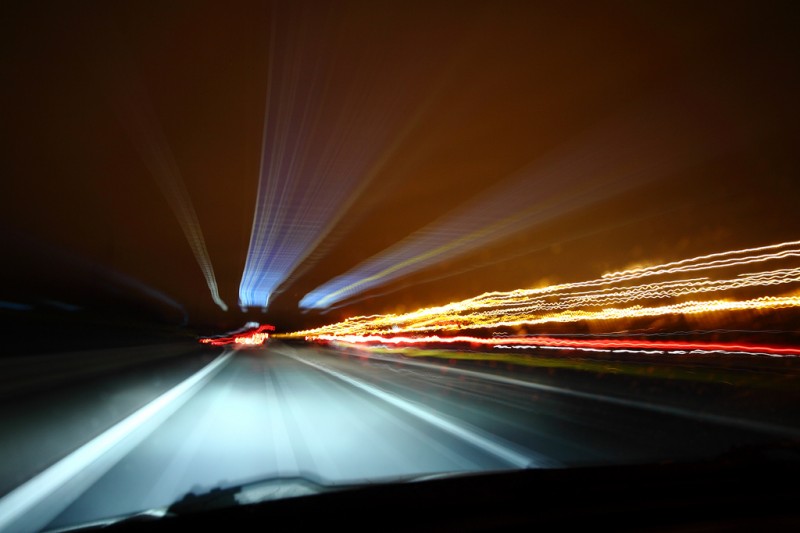
    <content type="html" xml:lang="en"><![CDATA[<p class="page-image pull-right"><span><img src="https://www.asm-autos.co.uk/image/4/800/800/images/6778234554_80ebbe0592_b.jpg" style="width: 400px;" width="400" height="266" alt="Car passenger's view driving at night" class="img-responsive center-block" loading="lazy" title="(CC BY 2.0) coming home 3 by mjtmail (tiggy)" data-toggle="tooltip" data-placement="bottom"/></span></p><p>Night driving is a unique skill and one that takes some getting used to for even the most confident daytime drivers.  With that in mind, we thought it’d be a good idea to go through some of the most effective techniques and tips for taking to the road once the sun’s gone down.</p><h3>Ensure your windscreen is clean</h3><p>This isn’t a technique as such, but it’s still important to the safety of you, your passengers and other road users.  At night, you’ll need to make sure that nothing hinders your vision.  Any kind of windscreen dust or dirt will limit how well you can see and make the darkness outside seem even darker.  Annoyingly, i will also make any oncoming headlights seem brighter.  Don’t forget to give your windscreen a quick clean before you head out at night.</p><h3>Keep your headlights in tip-top condition</h3><p>You should make sure that your headlights are clean and aligned correctly: they should be slightly pointing down, away from any other road users.  You should also ensure that they’re fully functional on all three settings - side, dipped, and main.  Your headlights are perhaps the most important factor when it comes to keeping you safe at night and by not maintaining them you’re creating unnecessary risk for yourself.</p><h3>Slow down</h3><p>When visibility is lower – as it inevitably is when dark - hazards become much more difficult to spot and your reaction time is much lower as a result.  Try to ensure that you keep to sensible speeds when the sun goes down: if you’re driving on an unlit road, you should avoid going above any speed that won’t allow you to stop within the stretch of road that your headlights cover.</p><h3>Avoid being dazzled</h3><p>Unfortunately, there will always be drivers who neglect to turn their headlights down.  If you can see one of these vehicles coming towards you, try to look slightly to the left of the road: a few seconds of exposure to bright headlights can affect your visibility for several minutes, cutting down your reaction time.  If you’re being dazzled by a car behind you, take the time to adjust your rear view mirror and get those bright lights out of your eye-line.</p><p>It’s also important to remember that your brake lights can create dazzle for other motorists: if you’re waiting at a junction or queuing in traffic, try to use your brake pedal as little as possible.</p><h3>Don’t smoke</h3><p>The smoke from cigarettes creates a sort of film on the windscreen that can heavily affect your visibility.  Again, the aim at night is to be able to see the road as clearly as possible, and cigarette smoke doesn’t help one bit.</p><h3>Avoid using your interior lights unless you really need to</h3><p>Though they can be useful when rummaging around in the car, you should always keep your inside lights off where possible.  This way, you’ll be able to avoid interior reflections on your windows that’ll stop you seeing outside.</p><h3>Use your lights when overtaking</h3><p>Overtaking at night can be a risky business.  Unless you’re on a motorway or any other well-lit road, you’re going to have a limited view ahead of the car you’re overtaking.  It’s important to avoid any kind of risky overtake, and to be absolutely certain that the road ahead is clear before you decide to manoeuvre.  Once you’ve drawn level with the vehicle you’re overtaking, quickly switch headlights to full beam in order to fully illuminate the road ahead (as long as there are no vehicles ahead of you, of course).</p><p>If another driver is overtaking you, then keep your headlights on full beam until they’re level, as this extra light can help them perform the manoeuvre safely.  Once they’ve pulled past, return your headlights to dip.</p><h3>Get lots of rest</h3><p>Driving at night can become very dangerous if you’re not fully rested.  If you’re feeling sleepy behind the wheel - or even just a bit weary - then find a safe and convenient place to stop.  Driving at night simply requires more concentration, so it is natural that you’ll get tired more easily.  Give yourself time to grab a chocolate bar and a coffee, and hit the road again once you’ve woken up.  Don’t take risks with night time driving: doing so can be fatal.</p>]]></content>
  </entry>
  <entry>
    <title>VIC scheme abolished: how does it impact you?</title>
    <link rel="alternate" type="text/html" href="https://www.asm-autos.co.uk/blog/vic-scheme-abolished-how-does-it-impact-you/"/>
    <id>tag:www.asm-autos.co.uk,2011-01-03:blog.332</id>
    <updated>2016-03-29T11:20:00+01:00</updated>
    <content type="html" xml:lang="en"><![CDATA[<p><img src="/storage/VIC.jpg?__SQUARESPACE_CACHEVERSION=1459250382771" alt=""/>The Vehicle Identity Check (VIC) scheme was abolished late last year following lengthy consultation between the Department for Transport (DfT) and key stakeholders.</p><p>The developments have been long-overdue with many members of the <span style="text-decoration: line-through;">Motor Vehicle Dismantlers Association (MVDA)</span> Vehicle Recyclers’ Association (VRA) calling for change in recent years.</p><p>The VIC scheme originated in 2003 when the DfT attempted to reduce car ringing which, at the time, was costing the national economy as much as £3bn a year. Car ‘ringing’ is the passing-off of stolen cars as accident or damage-repaired vehicles; resulting in innocent car buyers purchasing a vehicle that is later found to be stolen.</p><p>The VIC scheme enforced insurers to place a marker against a written-off vehicle against all of its DVLA records and the DVLA would refuse to issue a replacement V5 log book until the vehicle had been subjected to a VIC test and passed with flying colours.</p><p>Applicable to all Category A, B and C vehicles seeking to return to the road, VICs were undertaken at test centres throughout the country by the Driver Vehicle Standards Agency (DVSA) across England, Scotland and Wales and the Driver and Vehicle Agency (DVA) in Northern Ireland.</p><h3>Why has the scheme been scrapped?</h3><p>From October 1st 2015, the VIC scheme no longer applied to Category C vehicles, unless a VIC test slot had already been booked in prior to this date. Cat A and B vehicles were unable to obtain a V5 certificate after 26th October 2015.</p><p>Subsequently, those with Cat C vehicles looking to get back on the road no longer need to book a VIC test slot, they can instead proceed to secure a replacement V5 log book from the DVLA in the normal manner.</p><p>It has been suggested in certain quarters that the scheme itself has been far from a success given that it has reportedly identified just 40 ‘ringers’ from the 916,000-plus vehicles subjected to VICs.</p><p>In addition, much-needed advancements in vehicle technology have helped to make it harder than ever to ‘ring’ cars. The related costs for maintaining such a scheme have also been attributed to the DfT’s eventual decision to end VICs.</p><h3>How does this affect you?</h3><p>You’ll no longer need to fork out £41 to pay for your VIC test to get a Cat C vehicle back on the road. This, combined with the time saved transporting your vehicle and the potential for a waiting list of up to six weeks, makes it easier and cheaper to get a car back on the road than before.</p><p>At ASM Auto Recycling <a href="https://www.asm-autos.co.uk/online-salvage-auction/">we sell thousands of salvage vehicles at auction</a> and have been serving the UK’s salvage market since 1984.</p><p>Sourced direct from insurance companies, you can inspect our vehicles up for auction before you even place a bid. It’s never been easier to get a damaged vehicle back on the road legally.</p>]]></content>
  </entry>
</feed>