Scrap My Car
How do I scrap my car with ASM Auto Recycling?
If you’re planning to scrap your car, you’re in the right place. As a permitted Authorised Treatment Facility (ATF), ASM Auto Recycling has over 40 years of experience in scrapping cars, and we’re best placed to give you a brilliant price.
Give us a call today to get a valuation for your car. Local authorities and insurance companies with items to discuss should also feel free to contact us via phone or email.
Scrap Your Car
Best prices paid on any car!
All cars wanted, including MOT failures and non-runners. We offer prompt collection and immediate payment.
Simple car scrappage process
Getting your car scrapped with ASM Auto Recycling is an easy, pain-free process that can be over and done with in three simple steps.
Step 1:
Call our team today or use our online calculator for a free car scrap valuation to find out your car scrap value.
Step 2:
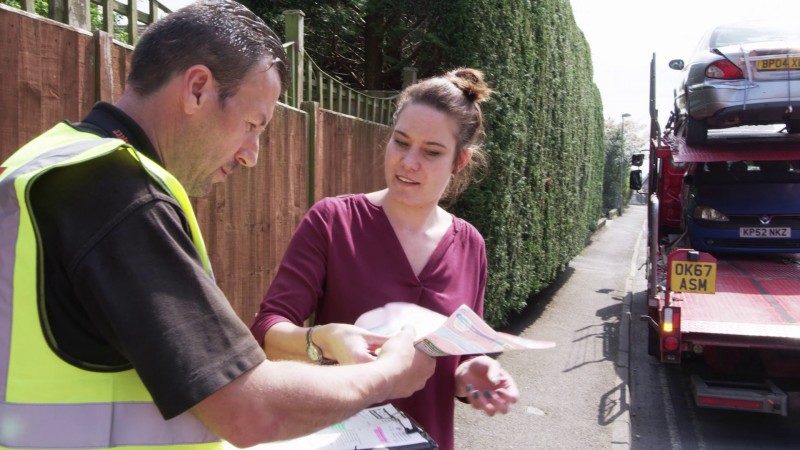
Book an appointment if choosing our scrap car collection service. Alternatively, drop off your vehicle at the nearest ASM Auto Recycling branch.
Step 3:
Make yourself a cuppa - we handle all the paperwork!
Do we collect scrap cars near you?
If you own an end-of-life vehicle or damage-repairable car that you don’t have the time or money to invest in restoring to roadworthy condition, you will be interested in our car salvage and recycling services. At ASM Auto Recycling, we service a vast area of Central England.
To make scrapping your vehicle as convenient as possible, we provide efficient vehicle transport services and salvage car collection services from our headquarters in Oxford (Thame).
Our vehicle transport service also encompasses the Aylesbury, Milton Keynes, High Wycombe and Watford areas, offering salvage car collection from your home or even your place of work to ensure a swift and efficient retrieval of your end-of-life car.
With our Thame, Oxford site containing over 100,000 recycled vehicle parts, we can help motorists in Aylesbury, Milton Keynes, High Wycombe, Watford and beyond get their vehicle back on the road without needing expensive new parts from a garage or dealership.
You can also contact our team and register your interest in our regular online salvage auctions at our Oxford-based car breakers yard.
Thame, Oxford
This state-of-the-art complex in Thame, Oxford features a range of car salvage departments, ready to handle unwanted end-of-life, stolen and repairable damaged vehicles.
The site features cutting-edge recycling facilities as well a warehouse and scrapyard with capacity for 1000s of used car parts and scrap cars, all available for resale on a daily basis.
Our Thame, Oxford scrap yard can be found at the Menlo Industrial Park situated on the A329, just a short drive from Junction 8 of the M40.
Thame, Oxford HQ
ASM Auto Recycling Ltd.
Menlo Industrial Park
Rycote Lane
Thame, Oxford
OX9 2BQ
| Mon – Thu | 8:00am | 5:00pm |
|---|---|---|
| Friday | 8:00am | 4:45pm |
| Sat – Sun | Closed | |
Aylesbury Depot
ASM Metal Recycling Ltd.
2-3 Westpoint Two
Gatehouse Way
Aylesbury, Bucks.
HP19 8YZ
| Mon - Fri | 7:00am | 5:00pm |
|---|---|---|
| Saturday | 7:00am | 12:00pm |
| Sunday | Closed | |
Including
Kings Langley Depot
ASM Metal Recycling Ltd.
The Recycling Centre
Railway Terrace
Kings Langley, Herts.
WD4 8JE
| Mon - Fri | 8:00am | 5:00pm |
|---|---|---|
| Saturday | 8:00am | 12:00pm |
| Sunday | Closed | |
Including
Totternhoe Depot
ASM Metal Recycling Ltd.
The Lime Works
Lower End, Knolls View
Totternhoe, Beds.
LU6 2BT
| Mon - Fri | 7:00am | 5:00pm |
|---|---|---|
| Saturday | 7:00am | 12:00pm |
| Sunday | Closed | |
Including
Why choose ASM?
We have over 40 years of experience in the industry and we continue to be at the cutting edge, making use of the latest and most effective technology. This ensures we’re still the most efficient firm around, and that we’re able to pass on those savings to the customer.
Our facilities process around 35,000 end-of-life vehicles every single year, and our online salvage auctions help re-sell around 2,500 vehicles every week. With ASM’s experience and know-how, there’s simply no better place to sell your car.
Value for money
With ASM, you can get a fair price for your car without the stress and inconvenience of manually taking your vehicle to be scrapped.Collection or drop-off
Our vehicle transportation service means we can collect scrap cars from your home or place of work when it is convenient for you.Safety as standard
Our scrappage collection service is run according to the regulations set out by the Environment Agency for Authorised Treatment Facilities, offering a full service for end-of-life vehicles across London, Buckinghamshire, Bedfordshire, Hertfordshire, Berkshire, Oxfordshire and the West Country.Circular economy
Scrapping your car is the most environmentally friendly way of dismantling your car. With newer vehicles enjoying greater fuel economy, more efficient catalytic converters and other car parts, scrapping your car at ASM means you can acquire a newer vehicle and reduce the amount of CO2 levels you emit into the atmosphere every day.Environmentally friendly
We can work together towards a cleaner environment. Our state-of-the-art vehicle dismantling facility is designed to work in accordance with the European End-of-Life Vehicle Directive, ensuring all hazardous waste and toxins are removed from scrap cars and disposed of as part of the ‘green’ de-pollution process.Recycling and reuse
Ensure metals and valuable metals have the opportunity to be re-used. Increasing our use of non-renewable supplies helps us provide a better environment.
Give us a call today to start scrapping your car, or fill out the form above.
What happens to my car when scrapped?
Our cutting-edge facilities mean that we can either pass the car on – if it’s repairable – through our salvage auction. Or we can use our recycling facilities to break older, inefficient cars down, growing our stock of guaranteed used car parts.
All scrap cars we buy are taken to our modern vehicle dismantling facility where abandoned and end-of-life vehicles are processed. This is how it works:
- Firstly, the shell of the car is de-polluted, and any pollutants are safely stored.
- The fluids in the car (petrol, oil, anti-freeze, brake and transmission fluids) are then fully drained and safely disposed of.
- Re-usable parts from the car are removed and cleaned up, and then re-sold through our online store.
- Any remaining parts that can’t be re-sold are also removed.
- Finally, the chassis of the car (as well as any remaining parts) are crushed and fed into the shredder, before being melted down.
At present, we house over 100,000 recycled car parts following the dismantling and recycling of end-of-life and salvage vehicles. Every single recycled car part is tested (where possible) and covered by our 90-day parts-only guarantee, providing used car owners with a cost-effective alternative for repairing their vehicle.
FAQs
Where can I scrap my car?
Only permitted operators of approved Authorised Treatment Facilities (usually known as a breaker’s yard or scrapyard) can provide legal evidence of the treatment, recovery or recycling of car parts and scrap vehicles. Find your local ASM Auto Recycling branch.
Which types of car do you buy?
At ASM, we routinely take in vehicles ranging from insurance write-offs, to end-of-life vehicles that will simply cost more to repair than they’re worth, to vehicles that function fine but the owners aren’t keen to use the inconsistent private market. Whatever car you’re selling, the chances are we’ve bought one like it before to be used in our car scrap yard.
What will happen to my car?
That depends on whether it’s still operational. If it is, it may get passed on through our salvage auction. Otherwise, the car will be recycled, with any re-usable parts being re-sold through our online parts store. The rest of the car will be fully recycled by our sister site, ASM Metal Recycling.
How much will I get for scrapping my car?
The scrap value of your vehicle depends on a few factors, including make, model and year of manufacture. You can use our online car valuation tool to preview the total amount you could receive – just one of many online calculators available to you in your research.
How do I know I’m getting the best price for my scrap car?
We encourage our customers to research all possible options to find the best deal available. At ASM Auto Recycling, providing excellent customer service is one of our core values – which is why we pay you for vehicles we recycle. With our vast expertise in processing countless end-of-life vehicles and used car parts each year, we ensure you get a fair and accurate valuation for your vehicle.
Can I trade my scrap car for cash?
Strictly speaking, we cannot pay you in cash for your scrap car. Changes to the law in 2013 made it illegal to pay for scrap metal in cash. This means we can only pay you by electronic transfer. Our sister company, ASM Metal Recycling, has an excellent blog post rounding up all the details of the changes and why it was necessary. Read here: Scrap metal for cash: the law.